
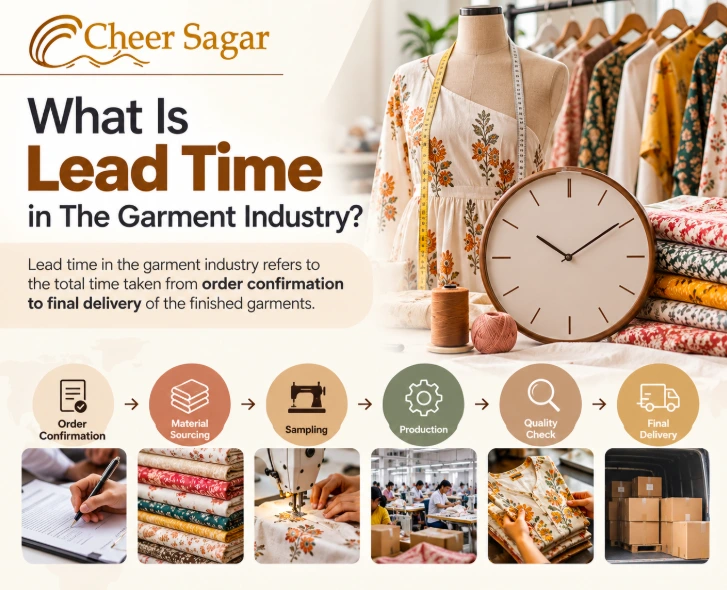
Lead time in the garment industry is the total time between order confirmation and shipment-ready goods. The time can range from one to two weeks for small orders and can go up to six weeks for large and highly customized orders. The lead time for garment manufacturing orders depends on fabric, design, sampling, production, and factory capacity.
It is important to note that even though lead time is variable, there are pretty good estimates a manufacturer can offer based on the design and materials requested. So, let’s take a closer look at what lead time actually means and the factors that impact lead time the most in garment manufacturing.
What Does “Lead Time” Actually Mean?
In garment manufacturing, lead time refers to the period required to turn a confirmed order into finished, shipment-ready garments. It is different from the delivery date because delivery may also include transportation and shipping time. Garment manufacturing lead time typically involves calculating the following parts of garment manufacturing. It starts when the buyer confirms the order and creates a purchase order (PO) with the manufacturer formally.
The lead time calculation includes calculating the time taken for the following processes:
Sampling and sample approval
Fabric sourcing or production
Cutting fabric
Stitching and assembling fabric
Embroidery, printing, or other design embellishments
Finishing the garment
Dedicated QA and QC measures
Tagging and packaging
Now that you know the processes that are considered in the calculation of lead time by manufacturers, it can help you determine how to place your order in a timely manner so that you can manage inventory and deliveries more accurately.
What Affects Lead Time in Garment Manufacturing?
Lead time can be influenced by several factors. Here’s a detailed overview of the different factors that influence lead time in garment manufacturing.
Order Volume and MOQ: If you have a large order or if the manufacturer has a large MOQ requirement, it directly correlates with a longer production time. Smaller orders may be completed faster; however, even that depends on factory scheduling capabilities.
Fabric Availability: When your order requires special fabric or one that’s not in stock with the manufacturer, it adds to your lead time. This is because fabric sourcing comes with its own timeline, which the manufacturer has no control over.
Sampling Rounds: If you have a design that’s complex and requires several sample rounds, it will take longer to produce in bulk. Complex designs or ones with lots of customizations generally take longer to manufacture overall.
Design Complexity: As mentioned in the previous point, design complexity and customization make production longer because it involves the use of specific specialized teams and production processes, which can increase the production time for garments.
Factory Capacity: In most cases, a garment manufacturer will not be working with you solely, so based on your order size, the manufacturer will determine how it can accommodate your order in its operations to ensure the quickest turnaround. This calculation itself seldom takes time when you’re working with top manufacturers.
If you can finalize these key specifications early, it can help you reduce the garment manufacturing lead time or at least help the process and timeline become more predictable.
Typical Lead Time for Garment Manufacturing
Even though there are several variable factors that can influence garment manufacturing timelines, manufacturers have some experience in handling manufacturing volume, so they can offer a tentative timeline for your order in most cases. Here’s a look at the general lead time examples offered by top garment manufacturers in India for different order sizes.
- Order Type
2. Typical Lead Time
3. Sample Order
4. 1 to 2 weeks
5. Standard Bulk Order
6. 2 to 3 weeks
7. Large Highly Customized Order
8. 4 to 6 weeks or more
The timelines mentioned above do come with some standard assumptions that the fabric and design requirements have already been finalized. If they are not, the timeline can be pushed back even further. This is because sourcing, sampling, production, and quality checks take time to ensure the garments you order are made exactly to specification.
How Can Buyers Reduce Garment Lead Time?
Buyers can reduce garment lead times by being thorough with their requirements. Here are some ways buyers can reduce garment lead times.
By approving samples quickly
By finalizing fabric and trims as soon as possible
By creating designs or choosing manufacturers who have close experience with the type of garments you’re trying to manufacturing
By planning ahead and not placing their orders in peak seasons
By choosing an integrated manufacturer that has its own design team and fabric sourcing department
For businesses looking for an experienced production partner, choosing the right garment manufacturer in India can help you keep a check over your order lead times. For more information feel free to check out Cheer Sagar. CheerSagar is one of the most experienced and celebrated garment manufacturers in the country with decades of experience offering and delivering bulk garment orders within the provided timeline.
Frequently Asked Questions
1. What is the average lead time for garment manufacturing in India?
For standard bulk orders, a typical lead time is 2 to 3 weeks once fabric and designs are finalised. Larger or more customised orders may take longer.
2. Does lead time include shipping time?
No. Lead time generally covers the manufacturing process up to shipment-ready goods. Actual delivery time depends on the shipping method, destination, and logistics provider.
3. Can lead time be shortened for repeat orders?
Yes, repeat orders can sometimes move faster when the design, specifications, fabric, and trims are already established. However, production schedules and material availability still affect the timeline.
4. How many sampling rounds affect the final lead time?
Every additional sampling and revision round can extend the overall timeline. Faster approvals and fewer revisions can therefore help reduce the time before bulk production begins.
5. Ready to Plan Your Production Timeline?
Have a specific delivery deadline? Discuss your requirements and production timeline with the Cheer Sagar team to explore your bulk garment manufacturing requirements.