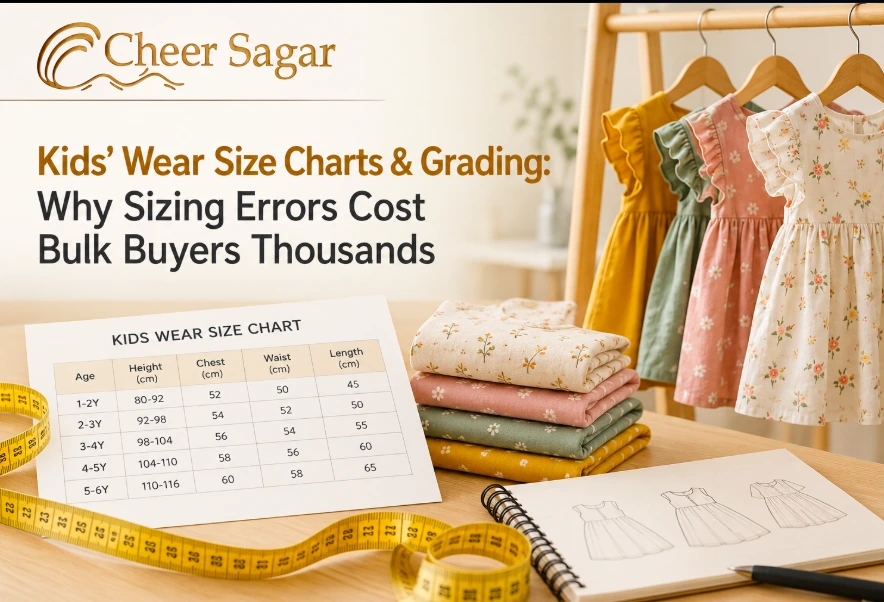
Sizing errors in bulk kids’ wear can lead to returns, customer complaints, and unsold inventory. This is why it is crucial to reduce the risk of size problems and size grading for your bulk orders. How do you ensure sizing errors can be erased? Well, the first step is to find and work with a reliable kids’ wear manufacturer. The next step is to ensure your manufacturer uses a reliable kids wear size chart that has graded measurement specifications, agreed tolerances, and appropriate size ratio to reduce these risks. Here’s a detailed look into what garment grading is and why it matters for kids’ wear.
What Is Garment Grading and Why Does It Matter for Kids’ Wear?
Garment grading is the process of adjusting a base-size pattern to create smaller and larger garment sizes from one design. Crucial measurements of the garment, such as chest, length, and sleeve length, proportionately change as per defined grading rules.
The challenge that’s unique to kids’ wear is that children do not grow at identical rates. This is why grading cannot rely on a simple percentage increase across every measurement. As a buyer, you have to distinguish between age-based sizing and height-based sizing. Age labels are convenient, but height can provide a more useful reference when children of the same age have different body measurements.
Why Do Sizing Errors Happen in Bulk Kids’ Clothing Orders?
Sizing problems often begin before stitching, when the garment manufacturer and buyer work from unclear or inconsistent specifications.
- Age labels do not match height: Children within the same age group can vary considerably in height and build.
- Different regional size charts: Different countries (India, US, UK) have different sizing conventions. So, if your brand sells across markets, it may create confusion.
- Missing measurement specifications: Without a technical pack identifying measurement points, the buyer and manufacturer may interpret dimensions differently.
- Unapproved samples or shrinkage allowance: Doing production without sample approval or consideration of post-wash shrinkage can result in garments that do not meet the agreed measurements.
What Does a Kids’ Size Chart Include?
As the name mentions, a size chart includes several aspects that go into defining how the sizing for the garments is done. For kids’ wear specifically, age is used as an important category to ensure proper sizing. The required measurements depend on the garment style. A frock, for example, may need additional specifications beyond chest and length. As a buyer, make sure you confirm the relevant measurement points, units, and acceptable tolerances before approving the chart.
How Should You Split Sizes in a Bulk Order?
The split should never be equal across all sizes. This is an important decision that you must take into account. The right size ratio depends a lot on the market you are targeting, the customers you want to sell to, your sales history, and the age groups you want to serve.
So, if you are selling to families with younger children, your size split should be heavier on garments for the younger age groups. The key here is to review past sell-through data, customer demographics, and market demand before finalising quantities.
How to Avoid Sizing Errors Before You Place the Order?
To avoid sizing errors, here’s a checklist for you to follow:
- Share a tech pack: If you share a tech pack with your size chart, measurement points, construction details, and relevant specifications, you can avoid sizing errors.
- Agree on measurement tolerances: Make sure you define the permitted difference between specified and actual measurements for each relevant point.
- Approve a pre-production sample: Check the fit, measurements, stitching, and overall appearance before authorising bulk production.
- Measure after washing: Verify whether shrinkage affects the garment dimensions and whether the sample remains within agreed tolerances.
Frequently Asked Questions
1. Should kids’ clothes be sized by age or height?
Height is often a more useful reference because children of the same age can vary considerably in size. Showing both age and height on a label can help customers choose more appropriate garments.
2. What is size tolerance in garment manufacturing?
Size tolerance is the permitted difference between a specified measurement and the actual garment measurement. Agree on acceptable tolerances for points such as chest and length before production.
3. Should every size get an equal quantity in a bulk order?
No. Allocate quantities according to your target customers, age distribution, and past sales. An equal split may leave you with excess stock in sizes that your customers purchase less frequently.
4. Can a manufacturer follow my brand’s own size chart?
Usually, a manufacturer can work from your size chart or tech pack, subject to confirming the specifications and production requirements. Graded patterns and samples should be checked before bulk approval.