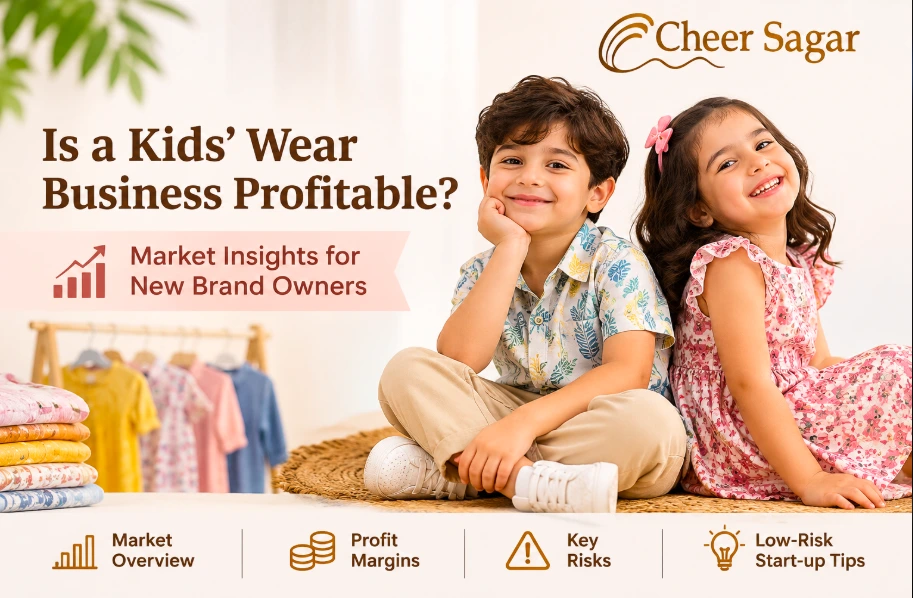
To answer briefly, yes, a kids’ wear business can be profitable. However, your profit margin depends on three key factors: the category you sell, how you source your garments, and how many orders result in returns. Children outgrow their clothes quickly, which creates consistent demand. The challenge is getting sizing, fabric selection, and stock levels right. Understanding the market, expected margins, and potential risks can help new brand owners make informed decisions.
What does the kids’ wear market look like?
India’s kids’ wear market is large and still has room to grow. IMARC Group estimates its value at $11.8 billion in 2026, rising to $17.4 billion by 2034. Demand in the kids’ wear market is driven by frequent size changes, changing fashion trends, festive and occasion-based shopping, and the steady shift towards online shopping.
Technopak puts kids’ wear at roughly 11% of India’s total apparel market (FY2023). The demand driver is built in: children can move up a clothing size within a few months, encouraging parents to purchase new garments regularly. Festivals, weddings, and birthdays create additional demand for occasion wear. Meanwhile, marketplaces and Instagram have made it easier for parents to discover and purchase products from emerging clothing brands.
What profit margins can a kids’ wear brand expect?
There is no single profit margin for every kids’ wear business. It depends on the product category, pricing strategy, and sales channel. Occasion and festive wear generally offer higher markups than everyday basics. Similarly, selling through your own website can help retain more revenue per sale compared to marketplaces, where commissions and return-related expenses can reduce margins.
Here is a simple cost breakdown for one cotton co-ord set:
| Cost per piece | Illustrative amount (₹) |
|---|---|
| Fabric | 90 |
| Stitching | 45 |
| Trims and labels | 15 |
| Packaging | 10 |
| Shipping | 40 |
| Marketing | 50 |
| Total cost | 250 |
| Selling price | 599 |
| Margin before returns and platform fees | 349 |
The above figures are illustrative and do not represent actual Cheer Sagar pricing. Every product return can reduce the margin, so it is important to account for the expected return rate when setting selling prices.
What are the biggest risks?
The biggest risks in the kids’ wear business are safety, sizing, and inventory management. Children’s clothing requires careful fabric and design selection, along with compliance with applicable regulations, particularly when exporting kids’ wear from India.
Sizing errors can increase product returns, while seasonal inventory can remain unsold if it reaches the market too late. New brands also face strong price competition from established fast-fashion companies. Instead of competing only on price, businesses should focus on fabric quality, comfortable fits, and appealing designs.
An accurate size chart is equally important because incorrect measurements can lead to returns across multiple sizes. Seasonal products, such as winter wear, also require proper inventory planning to avoid unsold stock. You can refer to this kids’ size chart guide to understand how garment sizing and grading work.
How can new brands start with low risk?
New brands should start with a small collection and focus on products with consistent demand. Ordering a limited first batch of popular everyday garments in tested fabrics, such as soft cotton, can help reduce initial investment and inventory risks.
It is also important to maintain accurate size charts and work with a manufacturer who understands size grading and applicable compliance requirements.
Test two or three styles across a complete size range before expanding your collection. Treat the first batch as an opportunity to understand customer preferences rather than investing heavily in a large inventory. Choose skin-friendly fabrics (you can also explore the best fabric for kids’ sensitive skin) and follow a bulk order checklist before paying any advance.
Cheer Sagar, a Jaipur-based apparel manufacturer and exporter, is among the kids’ wear manufacturers in India. The company has in-house design and CAD pattern-making teams to support garment development and production. You can explore its kids’ wear collection and visit the website to learn more about its manufacturing services.
Frequently Asked Questions
1. How much investment is needed to start a kids’ wear business?
The investment depends on the number of styles you plan to launch, your batch size, and your marketing strategy. Starting with a few styles, a small initial order, and organic social media promotion can help keep costs under control. Remember to budget for samples, inventory, product photography, packaging, and shipping.
2. Which kids’ clothing category sells best?
Everyday basics such as cotton T-shirts, co-ord sets, and frocks generally have consistent demand throughout the year. Festive and ethnic wear attracts higher demand during festivals and wedding seasons. Many new brands start with everyday essentials before expanding into occasion wear.
3. What fabric is safest for kids’ clothes?
Soft and breathable cotton is a suitable choice for most children’s clothing, especially for babies and toddlers. Look for skin-friendly dyes, smooth seams, and comfortable labels. Synthetic fabrics may also be considered for occasional outfits, depending on their intended use and comfort.
4. What is a good MOQ for kids’ wear?
A suitable starting MOQ should allow you to cover a complete size range across two or three styles without investing in excessive inventory. Before placing an order, ask manufacturers whether they offer trial orders or lower MOQs for new brands.