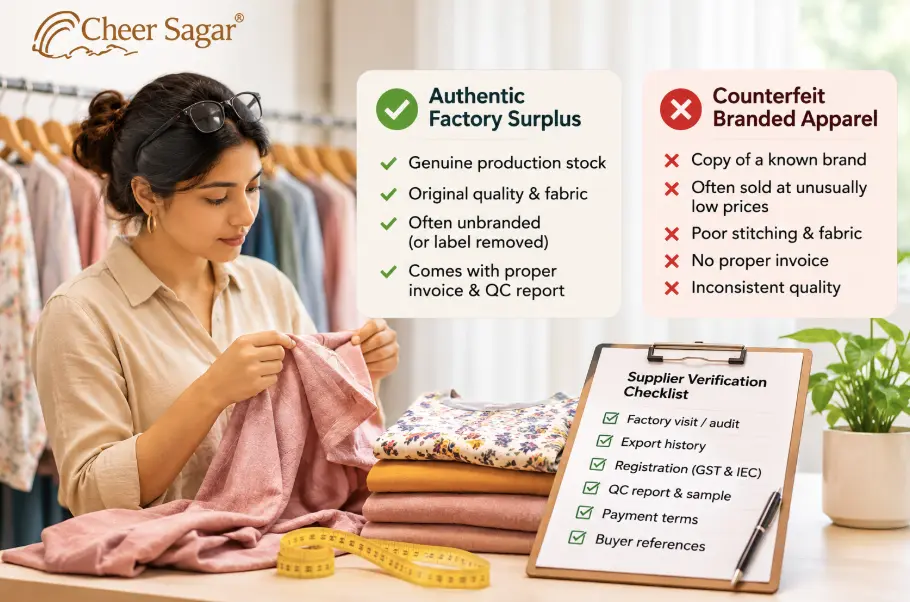
Authentic factory surplus is genuine extra stock from a real production run, sold by the factory that made it. Counterfeit branded apparel is a copy made to look like a known brand without its permission. Selling counterfeits can lead to legal problems, including stock seizures and marketplace bans. It is already risky for an end-customer to buy counterfeit apparel. If you’re the one found selling it, that’s a whole different ball game.
Customer trust is easy to lose, and if you’re found to be selling counterfeit products, that can mark the unofficial end of your brand’s journey. So, it is extremely important that you are able to tell the two apart and never end up buying counterfeit goods. Here’s how you can distinguish between genuine and counterfeit branded apparel, along with a detailed guide on what to ask your supplier before placing an order.
What is authentic factory surplus?
Authentic factory surplus is extra stock from a genuine production run, sold by the factory that actually made the order. It’s usually unbranded or has brand labels cut or removed because many export buyers don’t allow factories to sell leftovers under their name.
Surplus builds up when orders are cancelled or market demand is overestimated. The quality of factory surplus garments is identical to those that have been shipped out. CheerSagar, a Jaipur-based apparel manufacturer and exporter, sells export surplus garments from its own production lines, so buyers can trace each lot back to the factory floor.
What are the signs of counterfeit branded apparel?
There are several telltale signs of counterfeit branded apparel, with price being one of the most important indicators. If you notice branded apparel available at a surprisingly low price, that’s generally not a good sign.
Other signs include:
-
Labels that don’t match
-
Weak stitching
-
Wrong fabric weight
-
No proper invoice
-
Mixed and mismatched sizes in a lot
-
Inconsistent quality across a lot
When checking for counterfeit branded apparel, look for:
-
Correct brand name, print, and label spellings
-
Proper font and logo placement on labels and tags
-
Consistent stitch density
-
Good-quality buttons and zips, which are generally of poor quality in counterfeit apparel
Before placing your order, also ask your supplier how they sourced the branded stock, since genuine factories usually aren’t allowed to sell it.
How can retailers verify a surplus supplier?
To verify your supplier, you need to verify the business before verifying the clothes. A genuine surplus supplier should show you its factory, share registration details and export track record, and provide a QC report and sample for each lot. Hesitation on any of these points is a major red flag.
| Check | What to ask for | Red flag |
|---|---|---|
| Factory visit or video audit | A live walkthrough of the production floor | Refuses or only shows a warehouse |
| Export history | Countries and buyers they’ve shipped to | Vague answers |
| Company registration | GST number and IEC (Import Export Code) | Details don’t match the business name |
| QC report | Inspection report and AQL level for the lot | No report or a generic report |
| Sample | Pieces from the actual lot | Only a showroom sample |
| Payment terms | Written terms and a proper tax invoice | Cash only, full advance, no invoice |
| References | Contacts of past buyers | None available |
Working with a manufacturer directly makes these checks easier. See how CheerSagar’s factory quality checks work, along with CheerSagar’s certifications and state and national export awards.
What should retailers do about branded labels and legal risk?
Reselling branded clothing can also carry legal risks, even if you’re selling genuine stock. Brands may restrict who sells their products, and selling counterfeits breaks trademark law in India. If you’re in the business, make sure you keep every invoice and check with trade lawyers before selling branded surplus.
Many export buyers ask factories to cut or remove labels from surplus for exactly this reason. If you plan to sell branded pieces, ask the supplier for written proof that they have the right to sell them, such as permission from the brand. Online marketplaces can also remove listings and suspend seller accounts over counterfeit complaints.
This guide is general information, not legal advice.
Want surplus you can track to the factory?
Choose CheerSagar. They provide supplier documents, QC reports, and samples from current surplus lots before you place a bulk order. Request a quote today or download the company profile to get started.
FAQs
1. Is branded export surplus legal to sell in India?
It depends on whether the brand allows it and how the stock was sourced. Genuine surplus with labels removed is usually lower-risk. For branded pieces, get written permission and invoices, and confirm with a trade lawyer before selling.
2. How can I confirm a garment is not counterfeit?
Compare it with a genuine piece, check the labels, stitching, and fabric weight, and ask for the supplier’s invoice and QC report. If the supplier can’t explain where the branded stock came from, treat that as a serious red flag.
3. Why is surplus cheaper than retail?
The original order has already covered most production costs, and surplus skips retail markups, brand marketing, and store overheads. That’s why genuine surplus can be cheaper without being fake, as long as the price still makes sense.
4. What documents should a supplier provide?
Ask for GST registration, an IEC (Import Export Code), a tax invoice, and the lot’s QC report. For branded stock, also ask for written permission to sell. A genuine supplier will share these without any fuss.