
Prototype Sample Vs Pre-Production Sample: What’s The Difference?
As a buyer moving into garment bulk production, you may think approving a sample means your design is now ready for bulk manufacturing. However, did you know there are different types of samples, each with varying use cases in the production workflow? A prototype sample and a pre-production sample both serve different purposes.
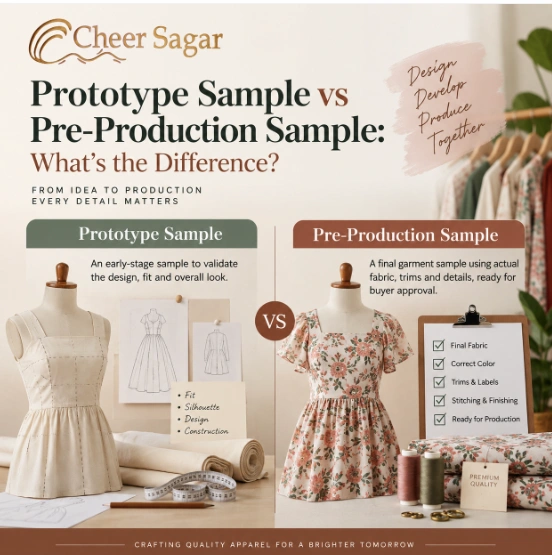
To give you a quick overview. The prototype sample is used to get a rough understanding of the garment fit, silhouette, and design. The pre-production sample is the final garment that’s production-ready and can be replicated properly in bulk manufacturing. It uses the actual bulk fabric, color, print, and trims.
So, now that you know the basic difference between the two, let’s explore further and learn what makes a prototype sample different from a pre-production sample and how they are both crucial for a bulk manufacturing process for garments.
What is a Prototype Sample?
A prototype sample is an early-stage garment sample created to bring a design concept to life. It is usually developed after the pattern and tech pack have been finalized but before every production material has been locked. The prototype primarily helps the designer or brand assess:
- Overall silhouette and proportions
- Basic construction and garment details
- Rough fit and shape
- Design interpretation
- Placement of design elements
Manufacturers may use substitute or greige fabric for this stage, particularly when the final production fabric has not yet been sourced. This means that the prototype sample is manufactured using available fabric and trims and not necessarily the exact fabric, color, print placement, trims, labels, or packaging that will be used in bulk production.
What is a Pre-Production (PP) Sample?
A pre-production sample is a final garment sample that’s designed for approval before production begins. This sample uses all the final parts and components of the garment and is sent to the buyer for approval. Once the buyer approves, this sample is used as a reference for the final garment production run. The buyer has an important role when it comes to approving the PP sample; the common factors that are tested include:
- Stitching and construction
- Final fit and measurement
- Print or embroidery placement
- Labels and other trims
- Fabric quality and color
- Finishing and packaging requirements
Before the final PP sample is manufactured and delivered to the buyer, there are several steps that must be completed. To learn more about sampling rounds in garment manufacturing, check out our detailed guide on how many sampling rounds are required before bulk production .
Prototype Sample vs PP Sample: Side-by-Side
| Factor | Prototype Sample | PP Sample |
|---|---|---|
| Purpose | Validating the concept and construction | Confirming the production specifications of the ready garment |
| Fabric used | May use greige fabric | Uses the actual bulk production fabric and trims |
| Stage | Early in the sampling process | Final process before bulk production |
| Approval focus | Design and rough fit | Final fit, materials, trims, construction, and finishing |
| Who approves | Brand team | Buyer/brand for final production sign-off |
| Risk if shipped | Design issues may carry forward to PP sample | Bulk mismatches may go unnoticed until final production |
How CheerSagar Manages Both Stages
CheerSagar is among the top garment manufacturers in India and has its own in-house design and sampling team to support bulk clothing orders. The team works closely with the buyer and their design team to refine the initial design into a fully realized garment that’s market-ready. Our team helps the buyer go through rounds of sampling before production to ensure the final garment always matches the agreed specifications. For brands looking for hands-on sampling support, private label and custom clothing manufacturing , CheerSagar provides a flexible solution for companies. Flexible MOQs can also make the sampling process more accessible to emerging brands.
Conclusion
The prototype sample and the PP sample are both crucial parts of a bulk garment manufacturing process. Each sample type validates the stage of production its run at. This ensures the final garment is without fault and made exactly as per the buyer specifications. As a manufacturer with decades of experience, you can partner with CheerSagar to discuss your sampling and manufacturing requirements.
Frequently Asked Questions
1. Is a prototype sample the same as a fit sample?
Not exactly. A prototype can overlap with an early fit sample, but its primary purpose is to validate the overall design, silhouette, and rough shape. A dedicated fit sample focuses more closely on precise measurements and fit before the final PP sample.
2. How many sampling rounds happen between prototype and PP sample?
Many custom clothing manufacturers use around three to four stages, such as the prototype, fit sample, size-set sample, and finally the PP sample. The exact number can vary depending on the garment, buyer requirements, and revisions.
3. Can bulk production start without PP sample approval?
It can, but doing so increases the risk of discovering fabric, colour, trim, fit, or construction mismatches after bulk fabric has already been cut. PP approval provides a final opportunity to identify and resolve such issues.
4. Who pays for prototype and PP samples?
Sampling costs are generally billed to the buyer. However, some manufacturers may adjust or waive sampling costs once a bulk order is confirmed, depending on their commercial terms.
Related Blog
The Best Types Of Shorts For Summer 2025: U.S. Trends You Need To Know
As the summer of 2025 approaches, fashion experts are predicting some exciting shorts trends in the U.S. With the growing...
How To Find A Manufacturer For A New Line Of Women's Clothing
Launching a women's clothing brand is an exciting venture. Finding the right womens garment manufacturer can make or break your...
Outsourcing Strategies For Apparel Manufacturers
Outsourcing has proven to be an effective way of getting things done in a number of industries. The same...