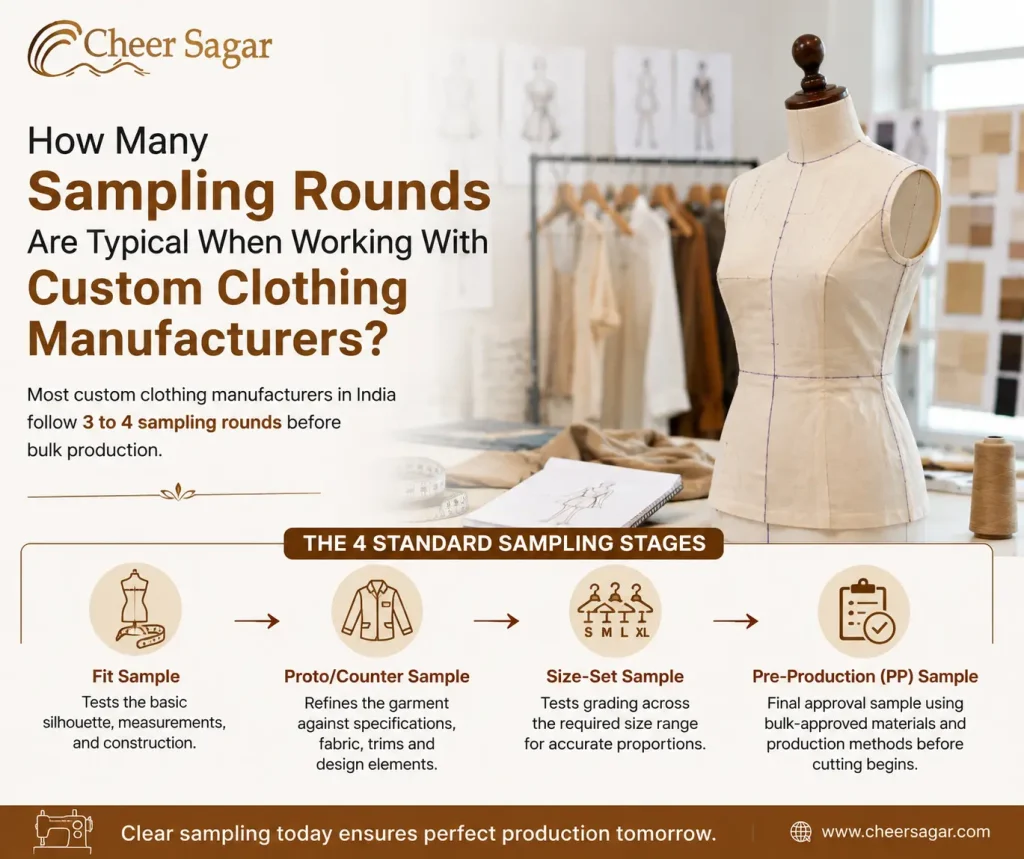
Quick answer: Custom clothing manufacturers in India generally go for three to four sampling rounds before bulk production. These rounds are used for fit samples, proto or counter samples, size-set samples, and pre-production (PP) samples. Complex pieces, unfamiliar fabric, detailed designs, and first-time buyers may require a few additional rounds to finalize fit, construction, grading, and specifications.
Why Sampling Matters Before Bulk Production
Sampling is the stage where a clothing design moves from a specification sheet to a physical garment. In general, this is the stage where buyers and manufacturers identify problems with fit, construction, fabric, trims, and finishing before committing materials and labour to bulk production. If you’re a brand working with a manufacturer India partner, you should care about this process because it completes the right sampling rounds and prevents costly alterations, production delays, and inconsistent sizing problems later. The exact number depends on the garment’s complexity and how clearly the buyer’s specifications are defined.
Most custom clothing manufacturers follow four core sampling stages:
- Fit Sample: Tests the basic silhouette, measurements, and construction using an available or representative fabric.
- Proto/Counter Sample: Refines the garment against the buyer’s specifications, including construction details, fabric, trims, and design elements.
- Size-Set Sample: Tests grading across the required size range to ensure proportions remain accurate between sizes.
- Pre-Production (PP) Sample: The final approval sample, made using bulk-approved materials and production methods before cutting begins.
Complex styles or significant changes between rounds can add one or two more samples.
The purpose of each sample round is different. Here’s a breakdown of what each sample round actually validates.
| Sample | What it Validates |
|---|---|
| Fit sample | Silhouette, basic measurements, proportions, and construction |
| Proto/counter sample | Design details, fabric, trims, artisanship, and buyer specifications |
| Size set | Grading and fit consistency across the complete size range |
| PP sample | Final fabric, construction, measurements, trims, finishing, and production readiness |
The PP sample is particularly important because it helps manufacturers and buyers get a final physical reference for bulk production. Once approved, it ensures manufacturers can use it alongside the technical pack to maintain consistency throughout the order.
The sampling workflow changes from buyer to buyer. It is important to know which sampling rounds you should go for, based on the type of buyer you have.
- Private-label buyers: As private-label buyers, they generally need three to four rounds of sampling, given that designs and specifications are reasonably established.
- Established brands: For an established brand, you can expect to receive specific details and highly detailed tech packs, with established fit blocks. These things can help potentially reduce revisions.
- First-time buyers: If a first-time buyer doesn’t have absolute clarity, they’ll probably require additional rounds of sampling.
- Complex orders: If you have complex orders, it is safe to say that they may take more than three to four rounds of sampling to get them right.
The idea of sampling is not a bad thing. The goal should be to create a clear and documented approval before moving to bulk production. Many manufacturers try ways to minimise the number of sampling rounds, and that ends up being costly mistakes in most cases.
A typical sampling round can take one to two weeks, although fabric sourcing, trims, embroidery, printing, and buyer feedback can extend the timeline. For example, four rounds could require roughly 20 to 40 working days if each round runs sequentially. Faster approval cycles can shorten the overall timeline, while repeated design changes can add weeks.
Buyers can reduce delays by:
- Providing complete tech packs and measurement charts.
- Confirming fabrics and trims early.
- Consolidating feedback into one revision.
- Approving each stage promptly.
- Freezing specifications before PP sampling.
A reliable garment manufacturer in India, like CheerSagar, treats sampling as a controlled development process rather than simply producing repeated garments until the buyer is satisfied.
An efficient workflow typically includes:
- Reviewing the tech pack before sampling.
- Creating a clear sample development schedule.
- Documenting measurements and buyer comments.
- Tracking revisions between each round.
- Confirming fabric and trim availability early.
- Obtaining PP sample approval before bulk cutting.
This gives buyers greater visibility over product development and reduces the likelihood of discovering fundamental fit or construction issues after production has started.
As mentioned, in most cases, three to four sampling rounds are standard practice to help both manufacturers and buyers come to a common middle ground. It helps provide a practical balance between development accuracy and production efficiency. The different sampling rounds each have a different goal and must be undertaken seriously. This is why, as a buyer, you should choose to work with an experienced custom clothing manufacturer, like CheerSagar, to get the best quality garments with appropriate sampling performed to ensure the highest quality output from bulk production. Check out their website to learn more about their services.
What is a PP sample, and why is it critical?
The (Pre-Production) PP sample is the final approval sample made before bulk production. It confirms that the fabric, fit, construction, measurements, trims, and finishing match the buyer-approved specifications before bulk cutting begins.
Can bulk production start without a size-set sample?
It is risky, particularly when multiple sizes are involved. A size-set sample verifies grading accuracy across the size range and helps prevent widespread fit problems in the finished order.
How long does one sampling round typically take?
One sampling round typically takes 5 to 10 working days. The actual timeline can be longer when fabrics, trims, embroidery, printing, or other components need to be sourced or developed.
Do custom clothing manufacturers charge for samples?
Most custom clothing manufacturers charge sample-development costs. Some manufacturers may adjust or credit these costs against the bulk order after the buyer confirms production.
What increases the number of sampling rounds needed?
Complex designs and unclear or changing specifications usually require additional rounds. New fabrics, intricate embroidery or prints, unusual construction, and first-time buyer requirements can add one or two rounds.