Quick Answer: The EU Ecodesign for Sustainable Products Regulation (ESPR) creates a framework for making products sold in the EU more sustainable, durable, and circular. Textile apparel is a priority product group under ESPR in the EU. For apparel exporters India, this means preparing for greater requirements around material information, traceability, circularity, and Digital Product Passports (DPPs).
What is ESPR: Quick Answer?
The Ecodesign for Sustainable Products Regulation (ESPR), Regulation (EU) 2024/1781, is an EU framework that’s designed to improve environmental sustainability in consumer products. It encourages circularity of products placed on the European market. It can establish product-specific requirements covering areas such as durability, resource efficiency, recyclability, and product information.
Textile apparel is specifically identified as a priority product group under the EU’s 2025 to 2030 ESPR Working Plan. This makes the regulation particularly relevant to clothing brands and their manufacturing partners outside the EU. For an Indian garment export house, the important change is that sustainability information will increasingly need to be supported by reliable product and supply-chain data rather than broad environmental claims. In short, this regulation is aimed at promoting genuine sustainable measures in the consumer product industry and curbing practices like greenwashing.
What is a Digital Product Passport (DPP)?
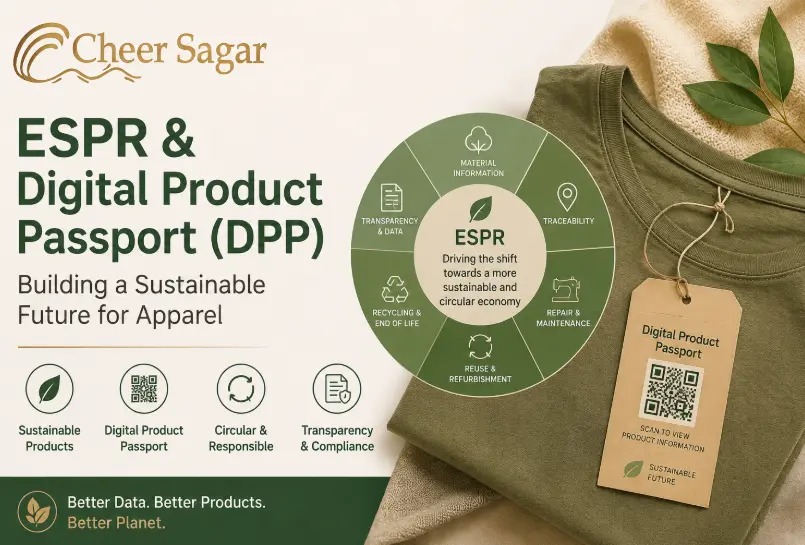
A DPP is a digital identity of the product. It includes details regarding the garment, which includes all its details about how it was manufactured and how the raw materials were sourced. Under the ESPR framework, it is intended to make relevant information about a product’s sustainability, circularity, and compliance more accessible for buyers and lawmakers.
In the world of textile and apparel manufacturing, even though there’s no fixed requirement list developed as of yet, EU buyers generally ask for the following information in a DPP:
- Product identification and characteristics
- Fibre composition
- Origin information
- Relevant economic operators
- Information supporting repair and maintenance
- Reuse, resale, refurbishment, and disposal information
- Recycling and end-of-life information
A DPP is presented in garments using QR codes or similar technologies placed directly on the product, packaging, or accompanying documentation.
Timeline: When Will ESPR Rules Apply to Apparel?
As per information available at the time of writing, the ESPR itself is already enforced. The textile-specific requirements are not yet fully finalized. The European Commission’s current textile-apparel page indicates a planned release of specific requirements by Q4 of 2027. The release will also be accompanied by further guidance on technical specifications and implementation measures for the textile and apparel industry.
The Commission’s broader working plan identifies textiles among the product groups scheduled for work in 2027. Exact legal compliance dates will depend on the final textile delegated act and should therefore be checked against the latest European Commission publications before making a product-specific compliance claim.
It is also important to note that the DPP infrastructure is already being developed. The European Commission launched the EU DPP Registry and testing environment in July 2026, creating an important foundation for future implementation.
What Garment Export Houses Need to Prepare Now?
Even before every textile requirement is finalized, manufacturers can start organizing the information buyers are likely to need.
A garment export house supplying EU brands should consider:
- Digitizing BOMs: Maintain accurate records of fabrics, trims, accessories, and their specifications.
- Recording fibre composition: Keep verified composition data for every style and material.
- Strengthening supplier traceability: Maintain supplier, origin, and material documentation.
- Documenting chemical compliance: Keep relevant testing and compliance records organized.
- Tracking circularity information: Build processes for documenting durability, recyclability, repair, reuse, and end-of-life characteristics where applicable.
- Standardizing product data: Ensure information can be shared consistently with EU buyers and their digital systems.
The exact data fields required for textile DPPs will be determined through future delegated acts and technical specifications, so manufacturers should avoid treating today’s preparation checklist as a final legal requirement.
How a Manufacturer India Partner Can Get EU-Ready Ahead of Competitors?
ESPR readiness can become a sourcing advantage for Indian manufacturers. Brands will increasingly value suppliers that can provide structured, verifiable product information rather than having to collect it manually for every order.
An experienced manufacturer India partner can prepare by:
- Creating a centralized digital database for styles, BOMs, fabrics, and suppliers.
- Linking material information to individual garment styles.
- Maintaining consistent supplier and origin documentation.
- Working with fabric suppliers that can provide reliable composition and sustainability data.
- Building DPP-ready data workflows before buyers make them mandatory.
- Reviewing new EU requirements regularly as textile-specific rules develop.
For apparel exporters India, early preparation can reduce future compliance friction and make collaboration with EU brands easier. The companies that already have clean, traceable product data will be better positioned when detailed textile requirements become legally applicable.
Conclusion
ESPR is likely going to be a product-level sustainability and traceability regulation that will be necessary for a garment export house in India to follow if they want to keep serving the European market. As the detailed textile rules are awaited, it is crucial for Indian manufacturers to get started with infrastructural changes required to ensure export houses can remain in compliance with the new EU regulations.
For more information on how a garment export house and apparel manufacturers India can align their manufacturing and export processes with international compliance requirements, check out Cheer Sagar. They are among the top garment manufacturers and exporters in India with decades of experience serving the European market. Check out their website to learn more about their services.
Frequently Asked Questions
1. Is ESPR only relevant to EU-based manufacturers?
No. ESPR requirements apply to products placed on the EU market, regardless of whether they are manufactured inside or outside the EU. This means Indian suppliers serving EU-market products can be directly affected through their buyers and supply-chain obligations.
2. What is a Digital Product Passport?
A DPP is a digital record containing relevant product information. Depending on the applicable product-specific rules, it can provide information about materials, sustainability, circularity, repair, recycling, origin, and compliance through a data carrier such as a QR code.
3. When does ESPR start affecting garments?
Textile-specific ESPR requirements are still being developed. The European Commission currently indicates a planned Q4 2027 adoption of the textile delegated act, but implementation timelines may evolve. Manufacturers should verify the latest Commission publications before relying on specific compliance dates.
4. What data will exporters need to provide?
Exporters should prepare accurate product and supply-chain information, including fibre composition, origin, supplier traceability, and relevant sustainability and circularity data. The exact mandatory DPP fields will be established through the textile-specific delegated act and technical specifications.
5. How can a manufacturer prepare early for ESPR?
Manufacturers can start by digitizing BOMs, organizing supplier documentation, verifying material composition, and developing traceability systems. Working with EU buyers that are already requesting structured sustainability data can also help establish DPP-ready processes early.