
Cotton Vs Polyester Frocks For Kids: Which Is Better For Sensitive Skin?
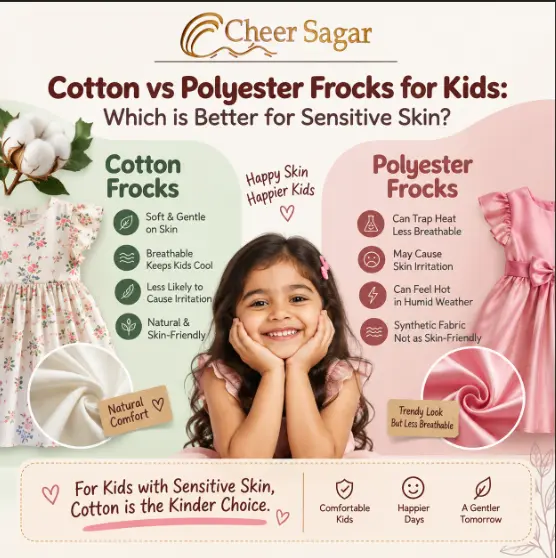
When it comes to children with sensitive skin, cotton is better than polyester. This is because cotton is breathable, natural, absorbs moisture, and allows more airflow. Polyester, on the other hand, is known to trap heat and sweat against the skin. This can potentially cause discomfort and irritation in kids. Pure cotton frocks or cotton blends provide a better balance of comfort for kids. To answer this question at a deeper level, let’s take a look at what makes cotton different from polyester and the benefits of cotton on sensitive skin.
What Makes Cotton Different from Polyester for Kids’ Clothing?
Cotton and polyester are different types of fibers that are used to make clothing. Cotton is derived naturally from cotton plants, while polyester is a synthetic fabric that’s made in a laboratory. Even though the origin doesn’t dictate the comfort and feel of the garment, it is generally noted that cotton and polyester have different feels, and cotton is a better fit for kids’ clothing. As mentioned previously, the moisture absorption and better airflow are primary reasons why cotton frocks for kids are a practical choice over polyester for kids’ wear.
While cotton is better for comfort, it is undeniable to note that polyester is better for durability. The synthetic nature of polyester ensures that the garments are more durable and easier to care for compared to cotton frocks for kids. In fact, polyester garments are also less prone to shrinkage compared to cotton garments, which is great for longevity and fit.
To harness the benefits of both polyester and cotton, kids’ wear manufacturers often use cotton blended with polyester as the fabric of choice for children’s frocks. This is because it allows manufacturers to get the durability from synthetic fabric while retaining the airflow and comfort of the natural fabric. However, when it comes to sensitive skin, pure cotton is the way to go. Let’s learn why.
Why is Cotton Considered Better for Sensitive Skin?
Cotton is often considered the best fabric for kids' sensitive skin. It allows airflow and absorbs moisture, both of which can help kids prevent irritation from wearing the garments. The reduction in sweat buildup on your body helps reduce discomfort significantly. Cotton is also softer to the touch and produces less static than synthetic fabrics. These are all reasons why cotton is better for sensitive skin. Children with sensitive skin are more prone to skin irritation, which makes choosing a fabric that potentially reduces the risk of irritation is the better choice for parents and even manufacturers.
Are There Any Benefits of Polyester Frocks for Kids?
Polyester is one of the most commonly used fabrics for garments today because of its low procurement cost, durability, and design flexibility. So, needless to say, polyester has found its way into children’s garments as well.
Polyester kids’ clothing can hold its shape and color well. It can also resist wrinkles and offer more durability. In short, polyester garments are easier to maintain and maintain their intended look for longer compared to cotton frocks for kids.
From a manufacturer's perspective, polyester garments are more affordable for manufacturing at scale, which is why there’s a huge market for polyester garments in every buyer category. However, in cases where the target audience has sensitive skin, polyester is not the fabric of choice for most.
How Does Fabric Choice Affect Skin Irritation & Allergies?
Fabric choice has some influence over skin irritation and allergies, as fabric presses against the skin and can cause friction, leading to irritation. In fact, chemicals used during the processing of fabric can cause allergies, especially in children with sensitive skin. So, the fabric choice does matter. Synthetic fabrics are more common when it comes to problems like irritation and allergies because they trap heat and sweat more often.
However, the fabric is only one part of the problem. Chemicals, dyes, finishes, and fabric construction are all factors that can lead to skin irritation and allergies in children. This is why it is important to choose natural garments that do not use harmful chemicals or dyes for children. It helps prevent rashes, irritation, and even allergies.
Which Fabric Should Parents Choose for Everyday Wear?
Parents with children who have sensitive skin should choose 100% cotton or cotton-blend garments for their children. It helps reduce the risk of irritation and
allergies while also being comfortable for children. Even though cotton has the potential to shrink, parents should consider shrinkage when buying and even opt to size up the garments they buy to account for fabric shrinkage. To learn more about kids' wear manufacturers in India, feel free to check out Cheer Sagar. Cheer Sagar is among the top kids' wear manufacturers in the country with experience in manufacturing export-quality garments for decades.
Frequently Asked Questions
1. Is 100% cotton always better than polyester for kids with sensitive skin?
In most cases, cotton is preferable because it is breathable and less likely to trap heat. However, finishing and dye quality also matter, so even cotton garments should be sourced carefully.
2. Can cotton-polyester blends work for kids with sensitive skin?
Yes. Blends with a high cotton percentage, such as 80% or more, can work for structured or occasion wear. For everyday clothing worn against the skin for long periods, 100% cotton is generally preferable.
3. Does polyester cause allergic reactions in children?
Polyester itself is not a common allergen, but it can trap sweat and heat, potentially increasing discomfort for children with sensitive skin.
4. How can I tell if a frock is made from good-quality cotton?
Check its softness, breathability, GSM, and whether the manufacturer provides information about dyeing and finishing standards. Reputable manufacturers should be able to explain their quality process.


Related Blog
How To Get The Right Outfit To Suit You: Few Tips And Ideas
What do you bear in mind when you keep up the entire newest trend? For some, it's a false fashion,...
How You Can Practice Sustainable Fashion
Sustainable fashion has always been a bone of contention that has been picked over and over again. Creating a sustainable...
Detailed Fashion Tips On How To Dress According To Your Body Type
Dressing according to one’s body type confines them to a select range of types of clothing and accessories that are...