
Inline Vs Final Inspection In Apparel Manufacturing
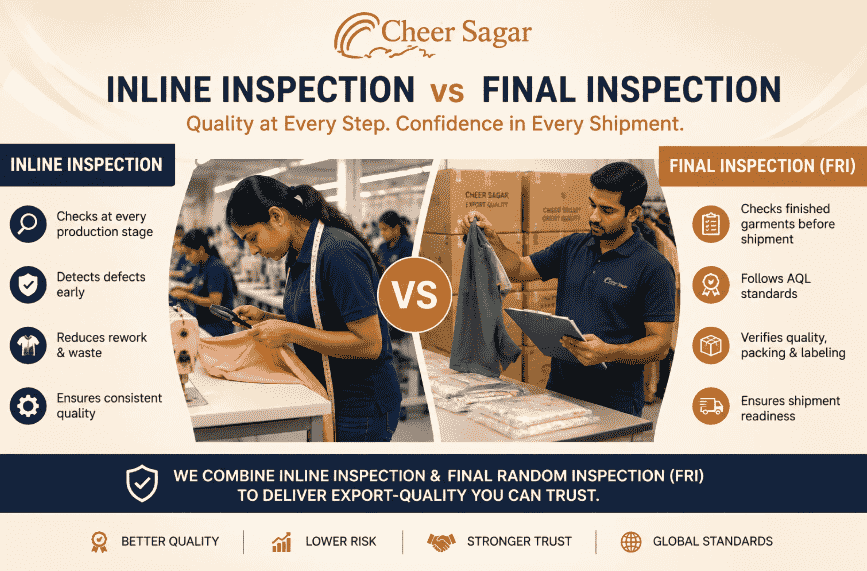
Quick Answer: Inline inspection checks are performed on garments throughout the production process. It starts from fabric inspection and follows through all the steps, including cutting, sewing, and mid-line operations. Final Random Inspection (FRI) is used to evaluate finished, packed garments before shipment. It follows AQL standards, such as 2.5. Leading garment export houses in the country combine both inspection methods to reduce the risk of defects.
Why Inspection Matters in Apparel Manufacturing
Consistent product quality is a necessity for global buyers. A single quality issue can lead to rejected shipments, costly rework, or damaged supplier relationships. Consistent product quality is just as important as pricing and delivery timelines. This is why experienced garment export houses, apparel exporters in India, and Indian garment exporters implement quality control at multiple production stages rather than relying on a single inspection before dispatch. Using both inline inspection and Final Random Inspection (FRI) helps manufacturers detect defects early while ensuring the finished shipment meets buyer expectations.
What is Inline Inspection?
Inline inspection is a quality control process. It is carried out during the garment production process rather than after manufacturing is complete. The objective of inline inspection is to identify defects as soon as they occur. This makes corrections faster, easier, and more cost-effective. It also prevents defective garments from ever reaching the end of the production line with defects.
Typical inline inspection stages include:
-
Fabric inspection: Checks fabric rolls for weaving defects, stains, shade variations, or damage before production begins.
-
Cutting inspection: Ensures pattern accuracy, fabric alignment, marker efficiency, and cutting precision.
-
Sewing line inspection: Monitors stitching quality, seam strength, thread consistency, and construction defects during assembly.
-
Mid-line inspection: Reviews partially completed garments to detect recurring issues before production progresses further.
By correcting problems immediately, factories prevent defective garments from moving through the production line, reducing waste and minimizing expensive rework later.
What is Final Random Inspection (FRI)?
Final Random Inspection (FRI) is performed after garments are fully finished, packed, and ready for shipment. Instead of checking every piece, inspectors evaluate a statistically selected sample based on the shipment size and the buyer's Acceptable Quality Limit (AQL).
Most export orders follow:
-
AQL 2.5 for cosmetic or appearance-related defects
-
AQL 1.5 for functional or critical defects
The inspection typically verifies:
-
garment specifications and measurements
-
Finishing and stitching quality
-
Branding and labeling accuracy
-
Folding and packaging
-
Shipment documentation and carton markings
The sample size varies according to the total production lot, ensuring statistically reliable quality assessment before shipment approval.
Inline Inspection vs Final Random Inspection
|
Criteria |
Inline Inspection |
Final Random Inspection (FRI) |
|
Timing |
During production |
After production and packing |
|
Primary Purpose |
Prevent defects early |
Verify shipment readiness |
|
Defects Detected |
Sewing, cutting, and fabric process defects |
Finished garment, packing measurement, labeling defects |
|
Cost of Fixing |
Low |
High due to rework and repacking |
|
Who Conducts It? |
Factory QC team, production supervisors |
Factory QC, buyer QC, or third-party inspectors |
|
Impact on Production |
Prevents defect accumulation |
Determines shipment approval |
Why Leading Garment Export Houses in India Combine Both
Relying on only one inspection stage creates unnecessary risk. Leading garment export houses use inline inspections to improve manufacturing consistency while using FRI as the final quality checkpoint before export.
This combined approach offers several advantages:
-
Detects quality issues before they become widespread.
-
Reduces production waste and repair costs.
-
Improves compliance with international buyer standards.
-
Minimizes shipment delays and chargebacks.
-
Increases first-pass inspection success rates.
-
Builds long-term buyer confidence through consistent quality.
For international brands sourcing from Indian garment exporters, a factory that follows both inspection methods generally offers lower quality risks and more predictable deliveries.
How CheerSagar Handles Quality Inspection
At Cheer Sagar, quality assurance is integrated into every stage of garment manufacturing rather than treated as a final checkpoint.
Our quality control process includes:
-
Fabric inspection before production
-
Inline inspections throughout cutting and sewing
-
Mid-line quality audits
-
Final Random Inspection using buyer-approved AQL standards
-
Packing and shipment verification before dispatch
This systematic approach helps us deliver export-quality garments that consistently meet international compliance and buyer specifications while reducing production risks.
What Happens if You Skip Inline Inspection
Skipping inline inspection often means discovering defects only after production is complete, when corrections become significantly more expensive.
Potential consequences include:
-
Higher rework and labor costs
-
Increased fabric wastage
-
Delayed shipment schedules
-
Greater risk of failing the final inspection
-
Buyer chargebacks and rejected orders
-
Reduced factory efficiency and profitability
Factories with structured inline quality control commonly experience 30 to 50% lower final inspection failure rates, making early inspection one of the most cost-effective quality investments in apparel manufacturing.
Frequently Asked Questions
Is inline inspection mandatory for export orders?
Inline inspection is not legally mandatory. However, this inspection is commonly
required by buyers. Most Western retailers and brands include inline quality inspections as part of their supplier quality requirements.
What AQL level do most apparel exporters follow in India?
Most garment export houses use AQL 2.5 for cosmetic defects and up to AQL 1.5 for functional defects. These are average rates, and the specific requirements for your case may vary depending on the buyer and product category.
Who conducts the final inspection, the buyer or the manufacturer?
This decision depends a lot on the specific contract you’re dealing with. Final inspections from the manufacturer’s QC team are generally covered, but buyers also prefer third-party inspections from agencies.
How much does inline inspection reduce final rejection rates?
Factories with effective inline QC typically reduce final inspection failures by up to 50%.
Can inline inspection replace final inspection entirely?
No, it is not a good production practice to replace final inspection with inline inspection. The Final Random Inspection verifies finished garments, measurements, packaging, labeling, and shipment readiness before export.
Related Blog
Kids Wholesale Clothing: Why It Is A Popular Niche?
The entire clothing industry is divided into several niches based on the type of clothing, targeted audience, style quotient,...
Guide To Launch A Kids’ Wear Brand In The US With An Indian Manufacturing Partner
Launching a kids’ wear brand in the biggest consumer market in the world is a great plan. The birth rates...
Outsourcing Strategies For Apparel Manufacturers
Outsourcing has proven to be an effective way of getting things done in a number of industries. The same...