Quick Answer: Germany is known for excellence in engineering and manufacturing. So, German buyers expect similar quality standards from garment manufacturers. Among the top requirements from German buyers are consistent quality, documented supply-chain due diligence, reliable sustainability data, and precise communication from manufacturing partners. As one of the major EU economies, Germany follows and requires manufacturers to also align with EU standards for textiles and apparel, especially when it comes to their sustainability and circularity.
Indian suppliers producing womenswear and kids’ apparel, certifications, chemical-compliance records, raw material traceability, and auditable documentation can be important differentiators. German buyers generally expect manufacturers to demonstrate compliance with evidence rather than rely on verbal assurances.
German Priorities at a Glance
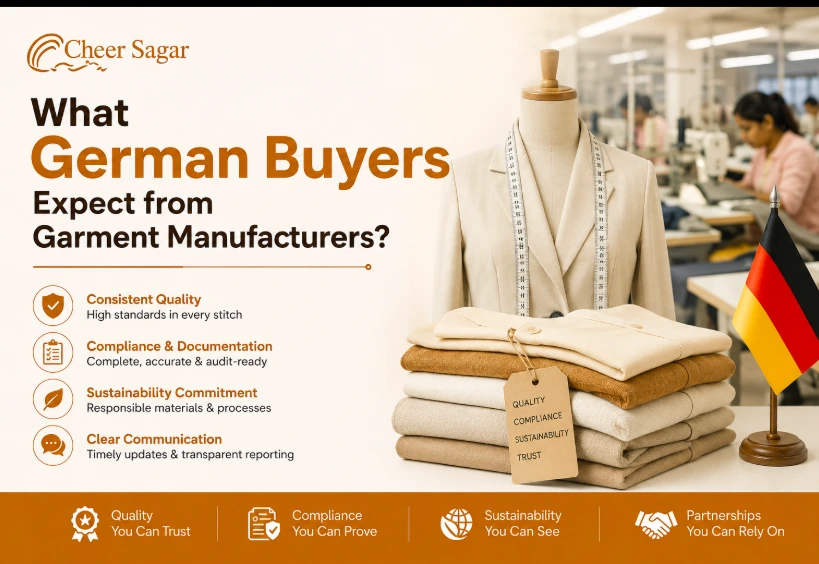
As explained above, consistent quality standards are non-negotiable with German buyers. To evaluate garment suppliers on more than price and production capacity, the buyers check for quality consistency, compliance support and understanding, sustainability, and dependable communication. The key expectations include:
- Quality: Consistent measurements, workmanship, materials, and finishing across bulk production
- Compliance: Documented evidence covering applicable labour, environmental, and product-safety requirements
- Sustainability: Reliable information about materials certifications, recycled content, and production practices
- Communication: Clear timelines, accurate production updates, and prompt reporting when issues arise
This is particularly relevant for womenswear and children’s apparel, where buyers may have detailed specifications covering fit, materials, chemical safety, labeling, and testing.
Compliance & Documentation Requirements in Germany
Germany has specific supply chain laws, namely the Supply Chain Due Diligence Act (LkSG). It requires companies within its scope to address human-rights and environmental risks in their supply chains. The law applies directly to qualifying German companies, not automatically to foreign suppliers, but it can have an indirect impact on Indian manufacturers supplying those companies.
A manufacturer should therefore be prepared to provide organized documentation covering areas such as:
- Supplier and factory information
- Working conditions and workplace safety
- Human-rights due diligence
- Environmental practices
- Relevant audit reports
- Material and chemical-compliance records
- Corrective-action documentation
Importantly, BAFA states that certifications and audits can support due diligence but do not automatically replace a company’s legal responsibilities under the LkSG. Chemical compliance is another important consideration. EU REACH requirements cover articles including clothing, and EU importers may need information from non-EU suppliers to meet their regulatory obligations.
Sustainability Expectations
Sustainability is increasingly part of apparel sourcing conversations with German buyers. Depending on the product category and brand, buyers may request certifications and evidence such as GOTS, OEKO-TEX Standard 100, recycled-fibre documentation, or sustainability assessment data.
However, certifications should not be treated as interchangeable legal guarantees. BAFA specifically notes that no particular certification or audit automatically satisfies every LkSG obligation. So, to help you understand the sustainability expectations better, here are the particulars that womenswear buyers pay attention to in Germany:
- Organic or recycled fibre content
- Packaging and waste reduction
- Responsible sourcing documentation
- Material traceability
- Dyeing and finishing processes
- Chemical testing
For kids’ apparel, chemical safety receives additional attention because garments are designed for a sensitive consumer group. EU REACH restrictions apply to certain substances in clothing and skin-contact textiles, including several phthalates.
Communication & Working Style Expected by German Buyers
Evidence and value-based communication is generally expected by German buyers. Precise communication that’s supported by data can help garment manufacturers and exporters stand out to German buyers. Here’s what German buyers want to know at each stage:
- Production status: percentage completed and current production stage
- Quality: inspection results and defect rates
- Materials: fabric and trim availability
- Sampling: approval status and pending changes
- Shipment: confirmed dispatch date and documentation status
- Problems: issue, impact, corrective action, and revised timeline
For leading garment manufacturer India, this level of reporting demonstrates operational control and makes it easier for German buyers to manage their own supply-chain commitments.
Why Private Label Manufacturers in India Are Winning More German Accounts?
India offers German brands access to established textile supply chains, skilled garment production, and extensive capabilities across categories. But competitive pricing alone is rarely enough for long-term European sourcing relationships.
A strong Indian supplier can stand out by combining:
- Consistent production quality
- Transparent supplier documentation
- Reliable material traceability
- Third-party testing and relevant certifications
- Clear production reporting
- Predictable lead times
- Strong sampling and approval processes
For a private label manufacturer, the ability to provide organized documentation from sampling through shipment can make the sourcing process significantly easier for German brands.
Conclusion
Maintaining high-quality standards consistently is one of the only ways to maintain good relations with a German buyer. For one, the country with one of the strongest currencies in the world backing it is not lacking options. This is why it is crucial that you consider all the points mentioned here to ensure you’re able to build long-term relationships with German buyers.
To learn more about how to develop garments and apparel that align with international, EU, and German market standards, make sure you check out Cheer Sagar. They are among the premier garment exporters in India and have decades of experience handling German accounts for various brands and manufacturers. Check out their website to learn more about their services.
Frequently Asked Questions
1. Do German buyers require specific certifications?
Many German buyers request certifications such as GOTS or OEKO-TEX Standard 100, depending on the product and brand. Some may also request sustainability assessment data or other third-party verification. Requirements vary by buyer and product, so manufacturers should confirm the exact certification requirements before production.
2. What is Germany’s Supply Chain Due Diligence Act (LkSG)?
The LkSG requires qualifying German companies to conduct human-rights and environmental due diligence in their supply chains. Indian manufacturers are not automatically subject to the Act simply because they supply Germany, but German buyers may require suppliers to provide documentation, audits, and risk-related information to support their own due diligence.
3. Are German buyers stricter on kids’ wear compliance?
Kids’ apparel can face heightened scrutiny for chemical and product-safety requirements. Manufacturers should be prepared for testing and documentation covering applicable chemical restrictions, including relevant REACH requirements for substances such as certain phthalates.
4. Do German buyers prefer FOB or other Incoterms?
Many buyers use FOB or CIF depending on their logistics arrangements and supplier relationship. The more important expectation is that the agreed Incoterm, shipment schedule, documentation, and responsibilities are clearly defined and consistently followed.
5. What communication style works best with German buyers?
Structured, direct, and data-backed communication is usually the safest approach. Production percentages, inspection results, material status, shipment dates, and clearly documented corrective actions are more useful than vague assurances about progress.