
How To Select The Right Clothing Manufacturers
Being in the textile business is a mix of angst and excitement. For your fashion brand to reach the pinnacle of success it’s important to bring what you have envisioned to life. No matter how glamorous or elite design you are imagining, it’s all in vain if you don’t have the right clothing manufacturers. After all, the quality of the end product depends on how the manufacturers are transforming those fabrics into your dreams!
But with so many options out there, choosing one can become a daunting task. Therefore, we have put together a precise guide on how to select the right clothing manufacturers for your brand. Let’s dive right in.
- Select The Type of Clothing Manufacturers
Depending on your requirement for the number of pieces and your budget, you can opt for a make-through or progressive production system. The first one involves a single tailor working on one piece at a time. The second one has multiple tailors working on the same piece with tasks like cutting, stitching, and finishing assigned to different individuals. Make sure you opt for the one that aligns with your business as it scales. This way, they will be able to give timely delivery of your orders as your brand grows. - Check Quality Certifications
Vital quality certifications confirm the manufacturer’s work ethic and the quality of the end product. Make sure they comply with local industry regulations. It’s also important to know that sustainability is a growing cause of concern among customers. Therefore, it’s advisable to look for a manufacturer with some sustainability certifications such as Global Recycle Standard, Ecolabel Index, Sustainable Apparel Coalition, and so on. - Shipping Fee and Minimum Order Requirements
Every reputed clothing manufacturer sets a minimum order requirement. It’s crucial to understand that you shouldn’t commit yourself to a minimum order quantity you can’t fulfill in sales. As for the shipping fee, never forget to take this into account considering how intense the impact of shipping charges can be on your profit margins. This is especially applicable if you are dealing with an overseas manufacturer. - Domestic Vs. Overseas
Yoga your garments locally usually comes at a higher initial expense on less you are operating your business from a developing country. India is known to have the best clothing manufacturers offering the highest quality finished products for a reasonable rate. As long as their shipping time is in accordance with your requirement, opting for a reputed clothing manufacturer from India can turn out to be the best deal you ever made. - Check Samples
Who wants to end up with a shipment full of defective items? If possible, opt for a manufacturer who can provide some samples of the kind of items you’re looking for. Even if it’s chargeable, it’s important to remember that it’s a worthwhile investment.
Summing It Up
Clothing manufacturers of one of the most crucial pillars of a successful fashion brand. This makes it all the more important to conduct thorough research regarding this as soon as possible. Sometimes it might take a while to land the best Clothing Manufacturers, just like dating! Keep the above factors in mind and make an informed decision after considering all the necessary parameters.
Knowing About Fabric Losses And Remedial Measures In The Clothing Industry
From converting the raw material to fibers to manufacturing end products, there are several steps involved in garment manufacturing. However, the likeliness of accidents and losses is quite high due to the market’s demand and vastness. For example, meals can burn down, causing millions of dollars to waste for any textile industry business. Similarly, implementing low-quality equipment in clothing manufacturing factories can cost the business several hundred thousand.
However, the most concerning loss a textile business can encounter is that of fabric. If the fabrics are damaged, there is no way you can produce the manufactured goods and sell them on the market. Besides, the cost of fabrics is very high, and the demand is skyrocketing. Therefore, sourcing them again from vendors is not the ideal workaround. This is why every business involved in the textile industry should know about fabric losses and the best remedial measures that can be taken to mitigate the risks and financial loss.
The first thing we will learn is why you can suffer from fabric loss in your clothing business. This will give you an idea about the incidents that can lead to such disastrous events and help you implement protocols to prevent such damage.

-
Fabric joint loss happens when two or more fabrics are joined together using stitches, and that particular portion is left out to get a smooth raw material.
-
When the fabric needs to be cut out in certain shapes, markers are used along the edges. During the cutting process, the cutting is usually done along the mark or a little bit inside the mark. This results in further fabric loss.
-
Splicing loss happens when two or more favorite players are overlapped, and the cutting mark runs centrally along the overlapping area.
-
When a single fabric is rolled along a cylinder, the last portion is usually left out because maximum deformity or damage is found in that part. This also results in fabric loss.
-
Ticket length loss happens when the measured fabric roll length is not equal to the measurement present in the ticket. It usually happens due to miscalculations on the vendor’s part when purchasing raw fabric.
-
Cutting edge loss is said to be the smallest loss that a textile business has to suffer because here, only those portions of the fabric are cut out that shouldn’t be there as per the designs.
The consequences of fabric loss are many, from financial to environmental aspects. For example, the cut fabric is no longer used to make something productive and is generally thrown away in the garbage. This causes more pollution, and the environment is harmed in the process. Also, during the ticket loss, where the lengths measured in the ticket and the actual length are different, the textile business needs to pay more to the vendor and therefore suffer a loss.

-
Although there is no appropriate remedial measure, you can prevent fabric loss by ensuring the marks done to shape the fabric according to the clothing design runs along the edges.
-
Also, splicing should be kept minimal, and alternatives will help reduce the fabric loss due to overlapped fabric cutting.
-
The last end of the fabric roll that is discarded can be used to make something more productive, like patch embroidery or Kantha stitches.
The fabric losses must be minimized to save the environment and businesses from suffering financial blows. However, this cannot be achieved overnight, and businesses must implement appropriate protocols. Proper planning and initiatives can mitigate these losses in the long run.
10 Questions To Ask A Kids Clothing Manufacturer
Manufacturing kid’s clothing is perhaps one of the most challenging parts of a clothing line. You see, when you are making clothes for adults, it is easy because an adult can express if they feel uncomfortable wearing any piece of clothing. The same can not be done by kids. However, comfort is also subjective, and what works for some kids might not work for others. You can comprehend what a tedious task it is to find a suitable kid’s clothing manufacturer for your brand that is able to deliver the quality and comfort you desire.

So, how do you do it? For starters, there are ten crucial things that you must discuss with your manufacturer before you start working with them. These ten questions can help you pick and find the right manufacturer that understands your view and helps you meet your requirement effectively. What are these ten questions? Let’s find out!
Q1: Are They A Manufacturer, Wholesaler, Or An Agency?
This is the first thing you should ask because the manufacturer you are working with needs to meet your requirement. So, understand their working structure and performance clearly before continuing on to the next questions. This will help you weed out manufacturers that don’t meet your requirements easily.
Q2: Ask About The Minimum Quantities
Every manufacturer has a minimum quantity that must be fulfilled for them to take on your order. Make sure you are on the same page with the manufacturer from the get-go to ensure your deal doesn’t fall through midway. Also, make sure that you understand the particulars of the minimum quantity and whether they are defined by size, colour, or both.
Q3: Understand The Services That They Offer
When you are working with a manufacturer, make sure you approve of the materials they use, the designs they make, and the overall motivation matches your vision. This will help you make the best choice for your brand and create a product that can adequately stand for everything your brand represents.
Q4: Ask About Their Maximum Capacity
Understanding the limits of your manufacturer will help you keep realistic expectations from your manufacturer and help create a hospitable work environment. The maximum capacity will also help you determine whether you need to look for a second manufacturing unit to fulfill your requirements or not.
Q5: Ask About Their Certifications
Tread lightly on this one because you don’t want to get off on the wrong foot with your manufacturer. However, learning about it can help you make a long-lasting, trustworthy relationship with your manufacturer.
Q6: Learn About Their Other Work Experiences
Continuing down the theme of treading lightly, learning about the past experiences of your manufacturer can help you understand their quality of work better. It will also help you ensure that their vision and yours are on the same line, which is crucial for a long-term working relationship.
Q7: Ask About Their Payment Terms
The discussion regarding payment terms is also a crucial discussion in figuring out the right manufacturer for your brand. Read the terms and conditions clearly and see if there are any fees you need to pay to the manufacturer for acquiring their services. Failure to perform due diligence can be harmful to your business interests, so be sure to read thoroughly.
Q8: Ask For An Estimated Production Time For Your Requirements
Knowing how long it will take for your manufacturer to deliver the products in the quantity you require is another crucial question that you must ask. Being able to meet your timeline will help the manufacturer secure the deal and vice versa.
Q9: Ask If Your Manufacturers Are Working With Third-Party Suppliers
Your manufacturer will be in touch with you and be responsible for the delivery and maintaining the quality and literally everything else. The same can’t be said about third-party vendors. So, learn about the third-party vendors first-hand to ensure your project doesn’t face problems afterward.
Q10: Can The Manufacturer What You Need Them To Make?
Last and certainly not least, perhaps the most important question of the lot is to ask if they can definitively deliver what you need from them. Kid’s fashion is difficult to nail; there are a lot of things brands have to follow in order to be successful in the kid’s market. So, ask your manufacturer if they can deliver all you need or not.
If you find reasonable and positive answers to all these ten questions, congratulations, you found your perfect match. If you don’t get the answers that convince you, you need to keep looking. So, before the article ends, you need to know there is another way to find your perfect manufacturer. How? Well, you just have to check out and get in touch with Cheer Sagar. What is Cheer Sagar? Find out here.
Types Of Buttons And Their Uses
We all know how buttons help keep the clothes together like a shirt, pants, skirts and so on. Several buttons are also used for decorating, snap closure, privacy, etc. Over the years, many new button types have been introduced to the textile market. Each category has a special use, and they also feature different looks.
Since it is crucial to know about the button types and their applications, we have given a brief description to help you make the best out of this textile accessory.
Flat buttons
One of the most common button types that you can find in the market is the flat button. From the name itself, you can understand it has a flat base that sits on any surface perfectly without leaving gaps on the edges. It primarily comes in a single color like white, black, green, and so on. Apart from this, they also come in a wide range of sizes, ensuring you can use them conveniently according to the application. For example, larger and multicolored flat buttons will work great if you want the buttons to behave as decorative items.

Lapel buttons
Lapel buttons are decorative accessories you can use in most clothes, from tuxedo suits to women’s wear. They are available in a wide range based on their designs, style, color, and stones. You can easily put them on the cuff, collars, over the breast pocket, at the back of a gown, and so on. Since the buttons come with encrusted stones, they must be handled carefully.
Shank
Shanks are often co-related to the flat buttons, but the only difference is in the holes. In shanks, the holes are hidden beneath the hollow protrusion, ensuring you can use the same decorative accessories in different clothing pieces. Most shanks are made from high-quality material to prevent the deformation of the hollow protrusion.
Snap buttons
Snap buttons are mainly used in jeans as they help ease the security of the apparel around your body frame. They come in different parts. The one having depression at the bottom is fixed on the clothing part that will sit against the skin. In the other part, a central protrusion can sit right over the depression and lock the buttons in place. They come in different sizes to ensure you can use the perfect button according to the purpose.

Fabric buttons
These buttons are highly decorative and often added to make a plain cloth look more extravagant and unique. Here, a flat button or the base of the snap button is covered with fabric or thread. To match the buttons with the cloth, the fabric is often cut out and then used to cover the buttons. While they are great in enhancing the cloth’s beauty, they aren’t much durable and might break off from the apparel.
Glass buttons
One of the best buttons you can find is widely used in garment manufacturing companies. They are mainly made from acrylic glass or simple fiberglass that imparts the same beauty and elegance as real glass buttons. You must choose the buttons carefully since glass is versatile and can lose its shine due to scratches and abrasions. Sometimes, they are filled with resin to enhance the appeal and charm.
Metal buttons
Metal buttons are used mainly with thick, heavy-duty clothes like jeans, denim jackets, trousers, etc. They come in various shapes and last for a long. You can find simple flat buttons made from metal or engraved with different figures and designs.
Conclusion
Now that you know the major types of buttons used to date in the textile industry, your main aim will be to look for the best pieces and get started with your cloth manufacturing.
A Startup’s Guide To Clothing Manufacturers
When you are just starting your business, you need the right partners to give your business the right direction it needs. Your clothing manufacturer, as the name suggests, is in charge of producing your designs, and it is crucial that you get them right. If your products are not right, it is very difficult for brands to find footing in the market without better products than competitors. So, for every clothing startup, here is a guide to clothing manufacturers that will save you a lot of time and effort.
Choosing the right clothing manufacturer for your brand will definitely take some time. The main reason is that most manufacturers are highly specialized especially bigger manufacturers. You have to not get too hasty; you must be very picky and go through various vendors before choosing your supplier. This is because you can only judge your options clearly once you have gone through a certain number of options. So, remember to not be too hasty and weigh your options carefully. Choosing the right clothing manufacturer is fundamental to the success of your startup.
Online
There is nothing you can not find online. You just need to know where to look. How can you learn where to look? You need to find other people or resources for what you are searching. Once you find some leads, follow up on them, and in no time, you will have a list of vendors available at your disposal, which you can use to pick the ideal clothing manufacturer for your startup.
Trade Shows
When you think about clothing manufacturers, one of the best places to find them is at trade shows, where they put up stalls to showcase their services. This is a great place offline to find various options of clothing manufacturers in your locality. Being in the same locality will help you save some money in the transit of your finished products so that it can be a great starting point for your startup.
Specialized Online Services
Today, there are specific platforms available for all communities. So, if you are looking for clothing manufacturers online, you may have heard of Sketch and Kompass. These platforms are specifically designed to help you meet clothing manufacturers that can help you start and shape your startup correctly. Sketch focuses on manufacturers that are primarily Europe-based, and Kompass just helps you find the best manufacturer according to your needs from anywhere in the world.
These are some of the best ways you can try to find your first clothing manufacturer to get your business off the ground. The key is to remember the advice given above and be picky and choose only the vendor that meets your requirement the best. This will help you scale your business quickly. So, if you are looking for a clothing manufacturer, please be sure to check out CheerSagar, the best clothing manufacturer in India. CheerSagar has helped thousands of startups launch their products and can help you too. For more information, visit the official website
Top 10 Water-Resistant Materials For Sewing
Using normal fabric for sewing leads to many problems that you must address soon. First, it won’t be able to resist water and will get damaged if it comes in contact with the same. Secondly, the women’s accessories need to be waterproof when making something as jackets, caps, gloves, and so on. If not, you might not be able to produce garments according to the client’s needs.
So, you should know about the top ten waterproof, water-resistant, and water-repellant materials used in sewing.
Laminated cotton
Laminated cotton is used to manufacture raincoats, caps, gloves, ski accessories, etc. It has a waterproof coating at the top in the form of a polymer. It resists the water drops from seeping through. To strengthen the fabric further, a waterproof backing is provided. As a result, you can easily use it for sewing garments or fabric accessories that will be known for its excellent durability and ruggedness.
PUL
PUL or polyurethane laminate is also one of the best waterproof elements made from polyester. But it has a plastic backing on whose surface is a thin waterproof coating. Therefore, it can be washed multiple times without causing any further damage. It is also known to be extremely durable and breathable, thereby offering comfort to the user. Perhaps, that’s why it is used in making baby diapers, menstrual cotton pads, hospital bed covers, etc.
Thermoplastic polyurethane
Thermoplastic polyurethane is an environment-friendly alternative to PUL and is used in several applications. It repels water excellently and is extremely waterproof. From mobile cases to wires, TPU is much preferred.
Vinyl
One of the most common materials used in manufacturing waterproof items is vinyl. Also known as polyvinyl chloride, it is a polymer and highly versatile. From automotive seat covers to boot linings, it is used in several things, thanks to its high durability, flexibility, moldability, and waterproof nature.
Leather
Leather repels water. If you pour a glass of water over it, it will trickle down or form water droplets without getting absorbed. But that’s not all! Leather is tough and lasts for a long. It even comes in a wide range of colours to ensure you can meet the market demands. You can either choose the naturally tanned leather or the synthetic leather-like suede.
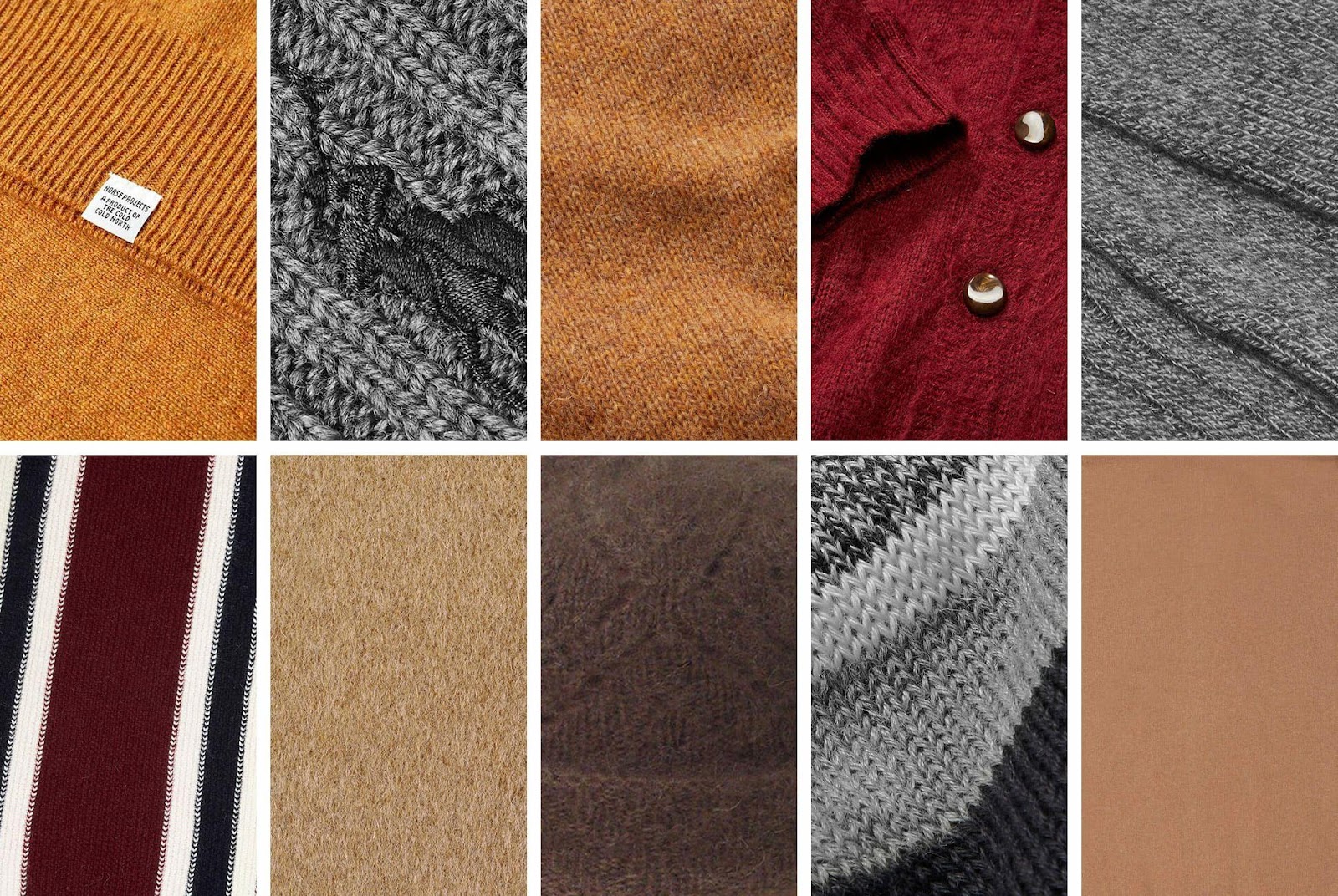
Wool
You would be amazed to know that wool also plays a crucial role in the textile industry because it is a water repellant and doesn’t absorb liquid. Although wool comes in various forms based on the origin and the species of the sheep and goat from whose body the fibres are taken, all types feature water resistance to a certain extent.
Oil cloth
Often used as tablecloths, luggage covers, kitchen liners, and more, the oil cloth boasts excellent resistance against water, thanks to the boiled coating of linseed oil on the cotton fabric.
Nylon and polyester
Another set of waterproof fabrics you can find is nylon and polyester. Both are used to make clothes, upholsteries, curtains, bed sheets, ropes, etc. They prevent water droplets and drizzle excellently.
Fleece
Fleece is mainly used to make comforters and thin blankets. They can resist water only when it is in small quantity. Soak the fleece in a bucket of water will absorb the water due to the fine pores between the woven threads.
Waxed cotton
You can understand from the name that this material is made from cotton fabric with a wax cover on its outer surface. Wax makes it an excellent water repellant, ensuring everyone can use the material to make different items.
Conclusion
While these materials are waterproof or water repellant, it is only when the water is in less quantity. They will absorb the liquid if they come in contact with a huge water volume.
Setting Up A Private Label Baby Clothing Line
With the increasing demand for stylish, comfortable, breathable, fashionable, and diverse baby clothes, the textile industry has witnessed the emergence of many companies based on this particular niche only. Therefore, you will have a lot of time to explore the market and decide which things you should include in your collection and which you shouldn’t. If you are willing to enter the textile market, baby clothing will be a creative line to choose from. This market section is still developing and offers several exciting opportunities for retailers and wholesalers.
However, with space, time, and labour crunch, managing your manufacturing unit might not be a solution, especially when opening the line of clothes. Therefore, the best workaround is to hand the manufacturing part to a third-party company with your label. This is what a private label baby clothing line is, and it will give you sole discretion over everything about the garments, from the designs and fabric choice to the collections and prices. However, setting up such a business is difficult, especially when the market does not have enough leverage for a private clothing line.
Keeping this in mind, we have discussed some of the main factors you should consider without fail to start the textile industry’s private-label baby clothing line.
Researching the market and competitors
The first thing you have to do is run research on the textile market concerning baby clothes. As we have already discussed, this specific section of the market is still in its growing stage. Therefore, taking references or depending on the analytical reports won’t be a good idea. So, you can get full information from your competitors and utilize your knowledge to make your business stand out in the crowd. You must ensure all business operations and workflows are scalable so you can adjust your operating frequency and bandwidth accordingly.
Creating a catalogue, mainly a draft
Once you are done with your market research, you have to focus on creating a draft catalogue for all products you would like to have under your brand name. It is better to go with one brand now because you are still at the starting phase, and to make more brands; you need that audience base. The draft copy catalogue can be changed according to your funds, investments, and scope. But with the draft ready in your hand, you can start the designing process accordingly.

Designing the baby clothes you want to include
You should hire popular designers experienced with baby clothes to start the design process. They will understand your requirements and long-term goals and proceed with designing and sketching accordingly. You must keep the baby’s comfort, relaxation, safety, and age in mind during this time.
Choosing all the fabric and other accessories required for manufacturing
One of the major advantages of having a private label baby clothing line is that you have full discretion on the fabric choice. You can easily choose the fabrics you want the clothes to be manufactured, along with the colours and designs. You can decide if you want to mix and match different fabrics to create unique garments for the little ones.

Designing the label with the brand name
The last step involves designing the brand name and the logo so that both are intertwined. The logo should be relevant to what you do or give and must have enough clarity when printed on the label.
Conclusion
No matter what designs you have chosen or the market condition, you must ensure the third-party manufacturer you have selected is popular and well known for their work. Rest assured, you can easily start the clothing line with a private label and our prepared guide.
Kids Wholesale Clothing: Why It Is A Popular Niche?
The entire clothing industry is divided into several niches based on the type of clothing, targeted audience, style quotient, seasonal clothing, and so on. Out of all these, the targeted audience has become the judging factor of every section of the industry. And that’s why opening a new clothing line for kids’ wholesale clothes might be a lucrative business.
Several businesses are already operating on a huge scale and with a global presence in this particular niche. The revenues are quite high, and profits have skyrocketed in recent years. While opening a kids’ clothing wholesale business sounds tempting, one shouldn’t try it before knowing the entire range of benefits. For this reason, we have discussed the advantages you can enjoy with the kid’s wholesale clothing line in the textile industry.
Kids’ wholesale clothes are high in demand.
There is no doubt that kid’s wholesale clothes are high in demand, especially if it concerns the Indian market. With such a high market requirement, you will have to make plans to increase production and manufacturing without compromising the quality. You can also benefit from selling the clothes wholesale to retailers and other businesses.
Excellent opportunities for online businesses
The kid’s clothing sector will offer you excellent opportunities for online business. You can have your online store or sell the products on well-established e-commerce platforms. Since the pandemic, online businesses are skyrocketing. If you can tap into this pool of endless scope, you will get huge profits and popularize your brand on multiple online platforms.
Simple and less competitive market
Manufacturing or designing kids’ clothes is super easy. You won’t have to spend hours getting the right design or thousands of dollars to manufacture the bunch for your store. Apart from this, the investment required is also low, and with the funds, you can have your manufacturing unit also. The competition is on the lower side, offering you better opportunities to explore the market and make your stand for the coming future.
The global market opportunity in several countries
As the kid clothes are almost similar in different cultures and countries, you have the opportunity to explore foreign markets with ease. This will bring you more revenue, improve your brand’s reputation, and allow you to venture into the online clothing industry.
Easier to settle a relationship with the brand with
Establishing a relationship with the brand won’t be much of a problem when you are doing business with kids’ wholesale clothing. All you have to do is make the center of your business child-specific. Once you achieve this mindset, you won’t have any problem meeting the market standards, establishing a high-quality clothing line, and taking your business up by several notches.
Offers faster return and higher profits
One of the major benefits of investing in the kid’s wholesale clothing business is higher returns and profits. The turnaround time is very less compared to other clothing niches, ensuring you can see the profit margin increasing within a couple of years. Apart from this, getting funds or investments won’t be a problem if your business idea is unique and much
More convenient than any other clothing niche
Honestly, dealing with kids’ clothes is much more convenient than any other clothing niche. The designs are always simple and almost of the same type. Besides, fabric prints, colours, and other specs must be as simple as possible. If you study the market properly, you will know that most parents prefer to choose sophisticated and elegant clothes for their children.
Conclusion
Now that you know the benefits of the kid’s wholesale clothing business, you need to start planning for the company because the competition is getting fierce each day. Apart from this, the market dynamics are also changing, and it won’t be late before they plummet your business due to obsoleteness. Therefore, start planning only and launch a scalable business.
Textile Weaving Process: A Process Of The Interweaving Of Yarn
One of the major processes followed in the textile industry is weaving. It converts the fabric into yarns, which are then sent to different distributors and manufacturers to manufacture different clothes. In earlier days, weaving was done by hand, which is why it took so much time to prepare one piece of clothing. Evidence of weaving tools and setups have been found in many excavations proving that the process is age-old. During those times, natural fibers were mainly used to create curtains, carpets, tapestries, and different types of clothes through various weaving processes.
Over the years, several new weaving processes have been introduced to the textile industry, allowing designers and other workers to create several types of clothes and embroideries. In this article, we will briefly cover the actual weaving process, describing the steps and the types of weaving processes followed to date in the textile industry.
Weaving is supposed to be a very complicated process that requires a lot of time. The main process involves intertwining two different yarns or threads in different patterns to form a solid weave. In this brief section, we have described the entire process generally to different weaving types for better understanding.

-
The first process is to choose the fiber or the material with which the cloth needs to be manufactured. Since there are so many different types of fabrics, the ones with maximum structural resilience are chosen so that the threads can hold the weave structure without any damage.
-
These fibers are spooled together to form a thick yarn or fabric.
-
Two independent yarn is taken that can be of the same or different type. For example, cotton and polyester can be woven to prepare a cotton blend fabric.
-
One strand is always set in the horizontal direction while the other will face the vertical direction.
-
The horizontal thread is known as weft, while the vertical one is known as warp.
-
The device used for interlacing both threads is known as a loom.
-
The warp is attached to the loom in a laid format, and then the left is inserted.
-
The process continues until the entire fabric, or the designed cloth is obtained. Ensuring that the work and weft are woven together at the right angles is important.
-
The fabric’s breathability varies based on the tightness or tension in both strings.
-
Sometimes, multiple strands of warp and weft are woven together to increase the thickness and structural resilience of the fabric.
Several types of weaving have been introduced to the market to ensure the textile manufacturers can come up with different types of clothes or any other government. Before concluding, let us briefly look at these categories for more clarity.

-
A plain weave is the most basic, with two warp yarn and one weft yarn. The weft is inserted between two parallel warp strands to create a box shape. Both these yarns need to be of equal size to create integrated designs.
-
Another famous form of weaving is a twill weave, characterized by diagonal lines. Here, the warp and weft yarns are woven together in a diagonal format to ensure that the entire fabric is strong and durable.
-
The basket weave is very similar to the plain weave, with the only difference being the number of warps and weft strands.
Now that you know the entire weaving process, you can easily incorporate the same knowledge within your textile business to ensure all the prepared fabric or clothing pieces are of the highest quality.
Printing Process – Steps Of Decorating Textile Fabrics
You have seen clothes and other fabric elements having different types of prints. Sometimes, the prints are concentrated on a certain area of the fabric, while in other cases, they are scattered across the fabric. You will also find fabrics with prints covering the entire body. Leaving no base fabric behind. Printing is done to beautify the fabrics and make them look unique and more appealing. Although most people consider this task easier, printing is the hardest task to achieve. Not only do the prints need to be accurate, but the color coordination needs to be optimal.
Therefore, printing businesses have a glorifying future in the texture industry all across the globe. Keeping this in mind, we have discussed major fabric printing aspects.

No, printing is not only done to beautify the fabric. Instead, this particular step in the textile industry has many more benefits than one can comprehend. So, you give you a headstart, we have listed some of the major advantages you can enjoy once you print the fabric.
-
With the help of fabric printing, your business will have a unique identity. Your dull-looking fabric will become more beautiful and appealing to the users. This can further help improve your brand’s reputation for offline and online markets.
-
Thanks to the availability of different printing techniques, you can easily attract more customers and compel them to buy the finished products.
-
Printing is done differently to bring out the best from the fabric. For example, block printing covers the entire fabric with interesting figures and patterns. Similarly, when you opt for ink print,
There are many different types of printing techniques adopted in different businesses. Unfortunately, few know these methods and produce prints of the same style. So, if you want to create varieties of printed fabric, you need to learn more about the following print tactics.
Block print
From the name itself, you can understand that in block printing, a wooden block is used with the concerned design being crafted out of their surfaces via hand. A paint solution is made, and the block is immersed in it. Once done, the block is used to make stamps on the fabric according to the concerned design.

Roller print
This printing technique passes the fabric yarn between the color roller and the iron roller. Each color roller has a design etched on its rolling surface, and multiple rollers can be implemented to print different colored designs simultaneously. Due to the fast action, this printing technology mainly uses tin manufacturing units to perform large-scale business operations.
Digital print
This printing method sends the designs through the computer or another system attached to the orienting machine. Once the image is received, the machine will start imparting the same design and print on the fabric under concern.
Screen print
Another common printing technique used in many small-scale businesses is screen painting. Here, a fabric or flimsy film is stretched across the entire frame. The design is etched on the screen and then transferred onto the fabric when the screen is pressed with excessive pressure. The color also gets transferred at the same time. Though it is still in practice, the method requires excessive effort from the labor, and multicolor printing is not possible simultaneously.
Now that you are about the major printing techniques to be followed in orienting businesses. You should take appropriate measurements to ensure the technique you use can yield the best prints on the fabric. If possible, you can also include several other processes to create diversity in the fabric looks.