
Small Order Clothing Manufacturers In India
So, you have started or want to create a clothing line in India? Where to begin? The first step would be to plan on what clothes you would like to make and the target customers
for your brand. Once you’re done with that, you have to design your clothes and plan on the style and focus of your brand. Then it’s time to work with a manufacturer and get your products on the market. So far, so good? Yes, but with a small hurdle. Private label manufacturers would not want to work on a small test batch to market-test your
garments. This is because most manufacturers have a minimum order quantity. So, what’s the solution? Small order clothing manufacturers.
These manufacturers work with you on small batches of your products in different variations to test your products in the market. Once you know what products work for
your brand, you can produce larger quantities of those products, allowing you to create a profitable clothing line. So, what’s the role of small order clothing manufacturers in
this process? Let’s explore!
How Can Small Order Clothing Manufacturers in India Help Your Clothing Line?
Help You Market Test Your Garment Designs
When you plan on launching a new clothing line or design to the market, doing a small test run can be helpful first. Designing in today’s world is often a digital process; a small test manufacturing run for your design can help you understand how well your design translates into the fabric. You will also be able to get real customer feedback on your
products and be able to adjust your run accordingly before you start mass producing based on demand.
Get An Idea of Your Product Demand
Before you start spending big bucks on the production of your clothing, you need to ensure that your clothes have the demand you anticipate. Often clothing lines
overestimate product demand and go into a loss very quickly when their inventory doesn’t clear out on time. This can be checked by working with a small order clothing
manufacturer that can help you perform a test run of your product in the market to help you get the right idea of your product demand.
Get A Chance To Experiment With Your Garments
Be it with fabric blends, designs, or production methods, being unique is crucial for helping your clothing line stand out in the market. Unique garments that fulfill specific
purposes can be achieved if you have the liberty to experiment a bit with your garments. And the ability to experiment can be yours when you work with a small order
clothing manufacturer in India. These manufacturers can help you realize your goals and create the perfect product based on your requirements and customer feedback.
Getting Your Product Quality Right
When you are planning to introduce a new line of garments to the market, getting the quality right from the get-go is crucial. As your product is new and it does not have any
point of reference as of yet, production quality can be tricky to nail at first. Small-order clothing manufacturers can help you get your product quality right by creating small
sample batches to help you perfect your design and quality. Once you are satisfied with your product and the market response is good as well, you can move on to larger
production. This allows you to get a smooth and successful product launch that is well-received by your customers.
Conclusion
So, that’s some of the ways how small-order clothing manufacturers in India can help you develop and maintain your clothing brand. If you want to study more about starting
a new clothing line, you can check out other blogs on these topics at Cheer Sagar’s online knowledge base. And if you want to work with an industry-leading clothing
manufacturer that caters to your needs and helps you get your product across the world, connect with CheerSagar. For more information, check out their website.
Japan’s Apparel Imports: The Indian Prospect.
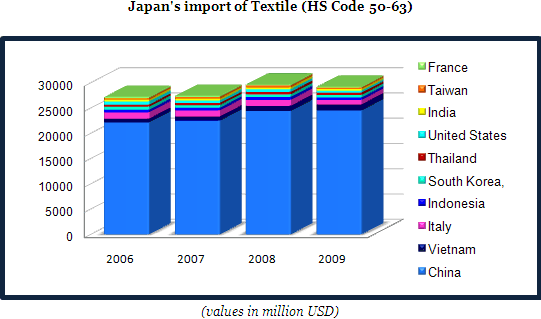
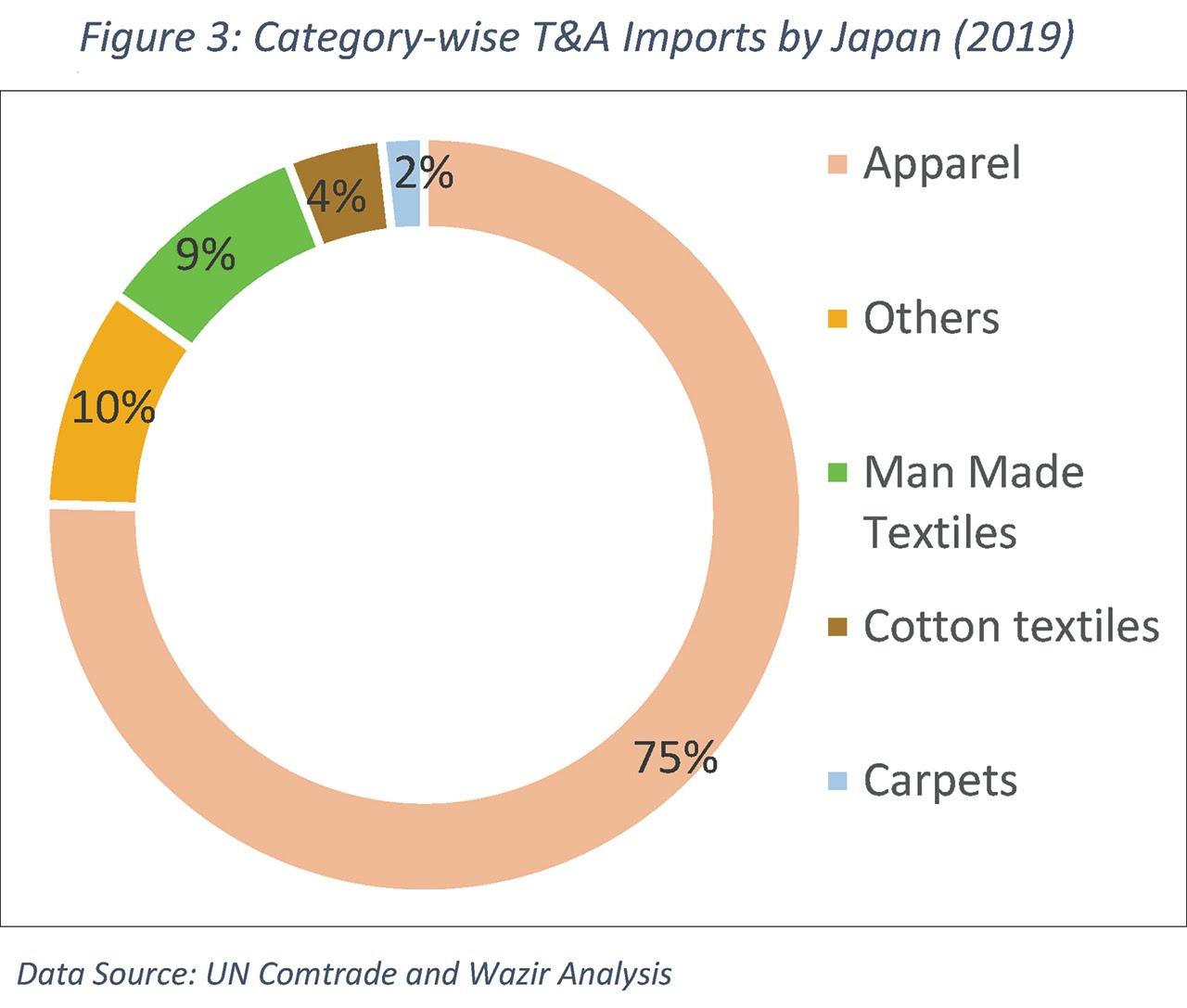
Japan is the world’s third-largest importer of clothing. The nation imports clothing worth USD 24 billion every year. 78.95 percent of textiles are produced in China, with Italy, Vietnam, South Korea, and the United States rounding out the top five suppliers. Japan imports clothes from these five nations 88.76% of the time.
With a minuscule 1.01 percent share, India’s contribution to Japan’s garment exports was pitiful. Until recently, just a few transactions took place between the two nations. Trade between the two nations is now in the midst of a significant shift.
India-Japan Trade Relations
The commercial relationship between India and Japan is good. Japan has a security treaty with three countries: the United States, Australia, and India. After World War II, diplomatic connections between the two nations allowed for a boom in trade between the two countries. Japan has taken notice of India’s recent economic solid development. Textile exports from India were $315.83 million in 2009.
India’s major textile and clothing manufacturers are looking for ways to improve bilateral trade between their country and the United States. To obtain access to Japan’s textile and apparel sector, Indian enterprises are also focused on forming partnerships with Japanese firms. Cotton clothing has a thriving market in Japan. Indian cotton and cotton-based knitwear manufacturers have a high possibility of gaining a foothold in the global market.
The CEPA Agreement Is Just What Indian Clothing Exporters Need To Get Their Business Off The Ground
CEPA with Japan was signed in February 2011 and allowed Japan to import clothes from India without paying any charge. In the past, India’s export tax on clothing was 11%. Japan imported garments from India at only one percent of its total imports.
India’s garment exports to Japan are estimated to rise by 50% due to the CEPA agreement. Several retailers in Japan and India are contacting Japanese manufacturers to sell their products in Japan and introduce Japanese brands to India.
Quality and timely delivery are the keys for Indian exporters to compete in the Japanese garment industry. “The Japanese importers are even willing to compromise on the prices to a significant degree if the items have some specific qualities that may outmatch the clothing from other countries,” says senior researcher Yoshiaki Kamiyama of the Japan Textiles Importers Association (JTIA).
Alternatives that are more profitable than their Asian counterparts
China’s low-cost garment manufacturing industry is experiencing some problems. Due to political and economic considerations, Japanese textile industries are likewise moving their attention away from China. Compared to its competitors, India can better manage the complete textile value chain.
As a result, India is better positioned than its rivals in the global market. In light of these reasons, global garment buyers are increasingly turning to India to fulfill their import and sourcing needs. Due to the expected removal of the 11% tariff, Indian clothing will be granted duty-free entry into Japan.
Wrapping Up
Exports of Indian clothing are on the road to recovery and are expected to expand. India has the potential to become a significant player in the global textile industry. Challenges such as low productivity, skyrocketing cotton and yarn costs, and excessive taxes are addressed.
Woven Fabric: What Are Its Quality Control Parameters?
As manufacturers, it’s crucial for you to always stay up-to-date about new fabrics and blends. Given the various parameters that can be altered to create new variations of fabric, the possibilities are endless. But, every new invention doesn’t come down the production line successfully.
More often than not, new permutations and combinations of fabric and yarns are not approved for production because they lack the required quality. And how is the required quality determined? Using quality control parameters for fabric. So, let’s take a closer look at woven fabric quality control parameters and why they are required.
Woven fabric that is developed by the crossing of warp and weft thread systems has various quality control parameters, all of which are used to determine the fabric quality. The weave texture of the fabric can be tested using the following parameters.
Tear Quality
Tear quality is one of the most important parameters used to determine the quality of the fabric. As you can guess from the name, tear quality is a test used to determine the amount of force required to tear a fabric. This test proves the durability of the fabric and how it can handle daily use and even mishandling by end users. A strong and durable fabric has its benefits but so does fabric that does not have great tensile strength. The use cases differ for both these fabrics making this test an important tool in determining the quality of the fabric.
Shrinkage Test
Before a fabric is sent off for production, checking out its shrinkage is crucial to ensure that the fabric does not lose its fitting after the fabric shrinkage. This test is especially crucial to check that the fit of your garments will not be lost after the laundry process of the fabric. The rate of shrinkage for your choice of fabric is a crucial test before you send it into production. This will help you determine the shrinkage rate of your fabric and appropriately account for that during the pattern-making procedure.
Elasticity Test
Elasticity is one of those things that are good or bad based on the use case. In general, the elasticity of the fabric is good as it ensures that the fabric will be less prone to tearing, and it will accentuate the curves of the human body better. However, the rate of elasticity is crucial to be tested before production begins to ensure the fabric is appropriate to use for your purpose and to ensure its quality as a fabric.
GSM
Grams per square metre is a metric used to determine the thickness and weight of the fabric. Generally, when a fabric is thick and has weight, it is stronger and more tear-proof than a fabric that is light and thin. The GSM test can determine if a fabric has the right weight and thickness needed for your project. And a greater GSM value can always be helpful for your fabric if you are searching for a fabric with good tensile strength and tear-proof abilities.
So, these were some of the tests that can be used to consider the quality of woven fabric. To learn more about quality control parameters for woven fabric, check out CheerSagar, one of India’s premier apparel manufacturers and exporters that can help you take your apparel and textile brand to the next level. CheerSagar is based out of Rajasthan, but can help you get your clothes from every corner of the world to countries on over six continents. To learn more about the services, check out the official CheerSagar website.
A Comparative Analysis Of India & China, The Two Manufacturing Giants Of The Apparel Industry
India and China are the two most populous countries in the world. And they also happen to be neighbours of each other. If they work together, they could be more powerful than any other superpower in the world, but what they are known for is their rivalry.
India and China compete with each other as two of the biggest manufacturing giants for various industries, especially apparel and garment manufacturing. So, let’s take a moment to do a quick comparative analysis of the strengths and weaknesses of India and China as the two prominent manufacturing hubs of the apparel and garment industry.
Large Workforce
Both India and China have the two largest working populations in the world. This allows the apparel industry, which is somewhat labour intensive, to flourish because there are labours available locally. This allows businesses not to have to hire people from overseas and effectively save some production costs in the process. The availability of a large workforce also allows these countries to speed up their production processes and improve production timing.
Availability Of Raw Materials
For any economy to flourish, you need both labour and raw materials, and these countries are blessed with both. India and China both have an abundance of raw materials. India is the world’s leading producer of jute and cotton, and China specialises in the production of synthetic fabrics like polyester and georgette. India is also adept at the production of synthetic fibres, but it is comparatively lower than China, and vice versa for raw materials like cotton and jute in China.
Large Demand Both Nationally & Internationally
India and China are the two largest populations, which ensures huge internal demand for garments. However, the industries are so huge that both countries have the capacity to meet the country’s demand and then go on to export internationally. Studies show that China exports almost 40% of the entire world’s garment market. India is not far behind as they are the fifth largest garments exporter in the world.
Technological Limitations
India depends on neighbouring countries like Bangladesh and even China for the supply of some specialised fabrics. This is because India does not have the infrastructure required to meet the production requirements. However, another important discerning factor is that India prefers and goes forward with a set approach for its apparel industry. China, on the other hand, goes, has a much larger and more diversified field of interest and infrastructure to be on top of every possible requirement.
Geographical Limitations
The apparel export network in India is spread across the entire country to cities where the production takes place the most. China, on the other hand, has a completely different approach; most of its export activities take place from the special administrative unit of China, which is Hong Kong. Given Hong Kong has easy land, water, and air connectivity to the rest of the world, it is one of the largest export hubs in the world. Due to the geographical limitations of India, the country can not consolidate the export functions of an entire industry in only one city.
There you have it, a quick comparative analysis of the strengths and weaknesses of India and China, the two manufacturing giants of the apparel industry. Both economies are growing rapidly and are expected to be in competition with each other even more closely as time passes. To learn more about the apparel industry, check out CheerSagar. You can also take a look at CheerSagar’s services if you want to work with one of India’s top apparel manufacturers and exporters.
Weighing The Options: Outsourcing In The Fashion Industry
Outsourcing is a normal thing; there is no stigma attached to it. Your brand is not less than any other simply because you outsource your production elsewhere. In fact, outsourcing allows a lot of individuals even to start up apparel businesses since they don’t have to take care of the production themselves. So, till now, all that you’ve read is good, right? So, outsourcing is certainly a good thing; can it be concluded? Well, then, this blog won’t exist, so certainly not. Just like most things in life, there are two sides to outsourcing as well. So, let’s weigh your options so you can decide where you stand on outsourcing in the fashion industry.
Straight To Work
When outsourcing, the burden of building or renting a factory, a workforce, and training them is eliminated. If you want to make t-shirts, you can make t-shirts from day 1 when you outsource your work. Plus, you don’t even have to source the raw material; you can spend your time doing what you love, and your work will keep going.
Saves Business Costs
Setting up your own factory, whether rented or self-made, is costly. It requires heavy capital investment initially, while the returns of that investment may take years to come in some cases. So, outsourcing can help you save on the cost of setting up. It will also save you the cost of upgrading your machinery over time. Overall, outsourcing allows you to save multiple business costs into just one, leading to the next point.
Lower Cost Of Production
When you don’t have to consider the cost of hiring and paying a workforce, factory and machinery costs, the cost of production is certainly reduced. This is mainly because outsourcing your production or parts of it doesn’t need huge capital investment. You also don’t need to wait a long time to get appropriate returns for your investment. And you can also produce according to your budget and ensure your inventory is moving quickly.
Dependency
Any business depends significantly on the workforce and production unit. If you are incharge of your production unit, you are always at the heart of your product and can solve every possible problem. When you outsource your production, you are no longer in control of it, and you are dependent on someone other than yourself. That can be scary and invite problems, so make sure you understand the risks involved before outsourcing.
Product Quality
Often in life, things are not exactly as you want them to be. When you outsource your production, you open yourself up to another such thing. Product quality is one of the most common problems faced by brands that outsource. Why? Because you can’t check the quality of 100,000 packed t-shirts by hand. And if things go wrong, the company responsible for your production will not take the fall; it will be your brand that will be dragged through the mud. So, make your alliances wisely.
Outsourcing, much like every business practice, has its pros and cons. In general, if you are vigilant and do your due diligence, you can keep a check on the cons of outsourcing. And it all begins with finding a trustable partner that can help you realise your brand’s dreams.
So, if you are also looking for a trustable and capable outsourcing partner for your fashion brand’s production, check out CheerSagar. CheerSagar is India’s premier white-label apparel manufacturer with decades of experience. CheerSagar is also a garment exporter and can help you export your garments to countries on six continents across the globe.
Manufacturing Plants – Where Passions Turn Into Products
Every garment and apparel people own comes out of a manufacturing plant. As a business owner, to start your brand, you need a product; even before that, you need a manufacturing plant to make your products. There are two options. Generally, you can either invest in your own manufacturing plant or you can outsource your manufacturing responsibilities to existing manufacturing plants as contract manufacturing. Regardless of how you go about it, the manufacturing unit is the heart of every apparel brand. So, let’s take a closer look at manufacturing plants and how they work.
There are different units and departments under the roofs of a manufacturing plant. All of them work tirelessly to ensure that the finished products are perfect and made as per the requirements. Here are some of the most noteworthy departments that you must know of in an apparel manufacturing plant.
Design Department
As the name suggests, the design department is responsible for designing the apparel based on market trends and buyer tests. The design is the first step of the apparel manufacturing process. The designs are made as collections for seasons and occasions specifically, and once the designs are approved, it starts the manufacturing process of your favourite apparel.
Pattern Department
Also known as the technical department, patterns digitise the designs and make them ready for manufacturing. The primary responsibility of the pattern department is to ensure that the designs being sent to production fit the end user appropriately. They work on various stages to ensure that the fit is flattering to the various curves of the human body.
Fabric Sourcing Department
Now that the design is made to fit, brands either work on orders of a particular fabric or they test out different fabrics to find out which fabric is best suited for the garment. The fabric sourcing department stores large amounts of various types of fabric. When a new production process begins, they test out different fabric and choose the best-suited one and send it over to the cutting department.
Cutting Department
The cutting department cuts the fabric into the required pieces and feeds them to the sewing department. Their sole purpose is to use the templates and cut the fabric accordingly to ensure that the garment pieces are all of the same sizes and fit properly after they are stitched. The cutting department works based on the needs of the sewing department daily basis.
Sewing Department
The final apparel starts to take shape after the stitching of the fabric pieces is completed by the sewing department. This is one of the most labor-intensive departments, and it requires a carefully designed factory floor layout to ensure the work is being done efficiently. Various production systems using specialized machinery are also used to ensure the work is done efficiently and quickly.
Finishing Department
The finishing department completes the apparel manufacturing process by cutting off the excess thread, checking the quality of the garment, and ironing them. In smaller manufacturing units, they are also responsible for the packaging, tagging, and labeling of the finished products and sending them off to the stores for selling.
So, these are some of the most important departments in a manufacturing unit. If you want to learn more aboutCheerSagar manufacturing units or any particular departments in this blog, feel free to Cheer Sagar. They are one of the best contract manufacturing agencies in India that can help you manufacture high-quality garments and export them to various countries overseas.
What’s A Master Pattern In Garment Manufacturing & How Do You Make It?
Fit is the most important make-or-break factor in garments. Women’s Cloth Manufacturers have to create garments that fit the end user and accent their body bulges in a flattering manner. Today there are size guides that have created standardized patterns for body shapes and sizes. From a simple drawing on paper, master patterns can be made and followed for an entire production line. But what are master patterns? And how are they made? Let’s find out!
A master pattern is a garment that fits perfectly but doesn’t have close to no design details. It is usually made out of thin cardboard sheets, after which it is used to transfer the pattern on thin paper. The paper is ultimately attached to the fabric by cutting it out and pinning it to the fabric. The master pattern is allowed to have shrinkage or double contraction because it is used to perfect the fit of the garment and finalise the measurements. A master pattern is also known as a sloper.
To make your master pattern, you will need a few pieces of equipment first. The basic pattern, scissors, tape, poster board, lightweight paper, oak tags, pencil, eraser, tracing wheel, ruler, pattern hooks, awl, and notcher. With all these pieces of equipment, you are now ready to make your master pattern, so let’s see the steps of how it’s done.
Steps To Make A Master Pattern
-
Ensure that all the seamlines, guidelines, and darts are drawn into the oak tag before you use the tracing wheel to press the paper pattern into the template paper. This will transfer all the seamlines, guidelines, and darts onto the template paper.
-
The template paper will receive a dotted impression after the tracing wheel is pressed. Complete the dotted impression by drawing in the gaps with a pencil and then cut out the pattern from the template paper.
-
Once the pattern has been cut out, you now have to measure the two sides (front and back) and make sure they are of the same size. Once that is done, you have to check that the shoulder seams and ensure they match on both sides. Go on to check the other measurement specifications on both sides and ensure that the guidelines match accordingly.
-
Once the measurements are complete, use the notcher to notch the guidelines and then dart the legs of your garment on the perimeter of the master pattern.
-
Take an awl punch to pierce the dart points, then use the notches and awl punches to draw new guidelines.
-
Lastly, make sure that the master pattern is flat and can be hung using a pattern hook without distorting its shape.
Once you have created your master pattern, your work is now half done. Now you have to perfect your working pattern and use that to get to your final pattern. How? There are a number of things you have to remember, which will make your task easier overall.
-
Do not add seam allowance to your working pattern
-
Sew your working pattern in muslin to check the fit
-
Add seam allowance only in the fabric
-
Make the final pattern out of drafting paper or oak tags
-
Make sure you add seam allowance to the final pattern
-
Remember to mark all the grain lines, darts, cutting instructions, pattern pieces, and names.
So now you know what a master pattern is in garment manufacturing and how it’s made. If you want to learn more about garment manufacturing or the apparel industry, be sure to check out CheerSagar, one of the best apparel manufacturers in India, which can help you manufacture and export your garments to various countries on over six continents.
What Are Geotextiles? Learn All About It Here
When you think about the term geotextile, it may seem like it is a textile made from eco-friendly materials or it is somehow related to the earth. Only the last part of that initial assumption is correct because geotextiles are related to the earth, and the earth in this context means soil. So, keeping riddles aside, geotextiles are a type of technical textiles that are used in civil engineering. So, with that information, let’s uncover geotextiles and learn more about them.
Geotextiles are a type of technical textiles, as mentioned previously, and they are used in civil engineering projects combined with soil. These textiles have tiny holes in them and are used to manipulate soil properties for civil engineering projects. Most commonly, geotextiles are used when making roads, landfills, and drainage structures. This material is used for its permeability and is used for purposes of filtration, separation, drainage, and stabilisation in civil engineering projects concerning soil and rocks. This is a brief description of what geotextiles are; now, let’s take a look at their history and how they came to be.
Geotextiles were used to strengthen the soil during any construction work. Egyptians were the first to use geotextiles in the form of natural plant fibres which they used to strengthen the soil. Then in the 1950s and 60s, geotextiles, as known today, started to be used in precast concrete to control and stop erosion. They used a special type of fabric which was a woven monofilament fabric. In 1977 at the Paris Engineering Conference, the term geotextile was assigned to such special fabric, and that’s the story of how they were invented and came to be.
Geotextiles are made from synthetic fibres like polyester and polypropylene. There are mainly four types of geotextiles. Let’s learn about them in brief detail.
Knitted Geotextiles
These geotextiles, as the name suggests, are made using knitting technology. They are quite flexible and cost-effective. Even though they are not known for a wide range of uses, they are best suited for projects involving erosion control and drainage. These geotextiles are expected to grow in demand as the need for erosion control of soil keeps increasing.
Woven Geotextiles
These geotextiles are built from various fabric types, such as woven mono and multifilament and slit film mono and multifilament. Woven geotextiles are the most used of the different types of geotextiles because of their impressive tensile strength and load-bearing capacity. These textiles work in strengthening the soil and as a separator.
Spunbond Geotextiles
Spunbound geotextiles have the fastest production time because they don’t need to be woven or knitted. These geotextiles are extruded, rolled into belts, and then heated to complete the process. These geotextiles are known for their robust useability and durability, as they work great in increasing soil strength.
Non-Woven Geotextiles
These geotextiles are made from synthetic fibres. While they are not particularly known for their tensile strength, their drainage, filtration, and separation capabilities are better than other geotextiles. These geotextiles are permeable, and they come in different types, such as resin-bonded, continuous filament-bonded, and staple needle-punched.
Geotextiles have a flourishing market, given that construction is increasing to meet the growing demands of the population. Additionally, the need to control soil erosion is also growing rapidly, which will surely boost the use and adaptation of geotextiles even more in the coming future.
So, if you want to learn more about geotextiles or the apparel and textile industry in general, be sure to check out CheerSagar, one of the top white-label apparel manufacturers and exporters in India. To learn more about the services, check out the official CheerSagar website.
The Do’s And Don’ts Of Garment Export
Exporting anything is an extensive and often lengthy process. There are a number of processes you have to go through before your products end up in the desired foreign market. Needless to say, it costs a lot as well. So, for something that is this high stake, you need a list of do’s and don’t always available to ensure you are on the right track. Mistakes can often be costly in exporting or just straight out cause failures, so make sure you always remember these do’s and don’ts of garment export while preparing your next export order.
Checking With The Government Guidelines
When you are exporting, your products need to be made according to the government guidelines of two countries, the one you’re from and the one where you are sending your garments. So, make sure you remember to follow all the guidelines accurately to avoid problems during and after exporting and for your products to be sold easily in foreign markets.
Thorough Market Study
When you are exporting your products to a foreign market, you don’t want them to stick out amidst the local products. Foreign goods are certainly expected to have better quality, but it doesn’t stop there. You should also do market studies to figure out what type of packaging and tagging you should do on your products. This will ensure that your products are blending in with the market standards of the foreign country.
Financial Analysis & Planning
From raw material sourcing to export partner charges, you should account for everything and more when exporting your garments, especially if it is on a schedule. Unless you are personally incharge of everything, everywhere, you can’t control all the various factors and problems that can come your way during exports.
But, adequate financial planning can help you make your life easier and ensure that your garments can reach their destination without any troubles. If you need financing for exporting, your analysis can help you get better financing and deals, so always remember to work hard on your budgeting and overall financial analysis.
Don’t Avoid Insurance
The world is uncertain, especially nowadays, and your business can’t be running on said uncertain terms. Getting insurance will protect your business against the problem of non-payment in various cases. Insurance might be an additional expense in an already tight budget, but don’t overlook its importance, no matter how trusted your buyers are and how safe you presume the conditions to be. Having the insurance in place will always be better than not at times of need.
Don’t Slack on Paperwork
Paperwork is the least interesting and exciting aspect of almost every business, but it’s often the most crucial. Even though it’s not exciting, it can certainly make or break your export deals. If your paperwork falls through during custom checks, your entire export timeline can be delayed or even cancelled based on the severity of the errors. So, always be tidy with your paperwork, just as you are with your packaging.
So, these were some important do’s and don’ts that you must remember before planning your next garment export order. If you want to learn more about garment exporting or the apparel industry in general, check out CheerSagar, one of the premier white-label apparel manufacturers and exporters in India, with decades of experience. CheerSagar can help you export your garments to over six continents. For more information about the services, feel free to check out the official CheerSagar website.
Garment Manufacturing In India – A Look At The Past & Present Of The Industry
Garments are a basic necessity of life, and India being one of the oldest civilisations in the world, has perfected the craft of developing garments for centuries. India has not only produced garments for themselves, but their reputation preceded them as they exported their garments and other handicraft items from the time of ancient civilisations. So, let’s take a look at the garment manufacturing industry in India, how it came to be, what its current scenario is, and its plans for the future.
The organised mass-producing garments industry didn’t come to India until the arrival of the British. Previously India still manufactured and even exported their garments, especially cotton, but it was not through organised large-scale industries and more through small-scale communities. There is history that proves that even in ancient times, India used to export cotton to Egypt and other western countries.
As time passed and the Mughals came to India, they helped the Indian garments industry grow many folds. In the middle ages, India was exporting garments to various parts of the world, and their silk and cotton garments had great demand in the west. One of the countries where the demand was exceptional was Great Britain. This is because 25% of the entire imports of the East India Company were Indian textiles and garments.
After the wake of the Industrial Revolution and the colonisation of India by the British, they cracked down on the Indian textile industry and massacred the artisans. It was in an effort to cripple the industry and force Indians to have to purchase British factory-made garments. To sprinkle salt in the wounds, they also set up factories, assembly lines, and mills in India to modernise the industry.
Post-independence of India in 1947, the Indian government tried its best to restore the community-based small-scale garment industries and was successful to some extent. Alongside that, the government also encouraged the mills and assembly line factories to grow to meet the requirements of the growing population. This was the start of the modern Indian garments industry that balanced ancient traditions and modern technologies to create garments that won people’s hearts across the world.
Today, the garments industry in India is growing exceptionally well because of certain factors, such as
-
The availability of raw materials like cotton is in abundance. India is the world’s largest producer of cotton. India also stands atop the production of jute, which is also heavily used in the garments industry.
-
The massive production of synthetic materials like polyester. India is the fourth largest producer of polyester in the world.
-
The easy availability of domestically available skilled labour that has been trained for generations.
-
A large population is dependent on the industry to meet their basic needs for clothing.
-
Excellent international relations with various countries and Free Trade Agreements with foreign countries.
Adapting To Latest Technologies
The Indian garments industry aims to utilise technology and all the various tools it has made available to increase factory outputs. The increased output will allow companies to meet domestic requirements better and export the surplus for added profits and growth.
Moving Towards Sustainable Infrastructure
India houses some of the top most polluted cities in the world. To counteract the pollution, all major industries in India, including the textile and garments industry, are moving towards sustainable and eco-friendly production of their products. This is one of the goals of the garments industry in the future.
So, this was a look into the garments industry in India and the past, present, and future of the textile, apparel, and garments industry. If you want to learn more about garment manufacturing in India, check out CheerSagar. You can also avail the garment contract manufacturing and exporting services to take your brand and products to the next level. For more information, check out CheerSagar.
Meta Description – Understand how garment manufacturing in India has evolved over time. Check the steps taken by the government of India over the years to boost the garment industry.