
How To Choose A Clothing Manufacturer
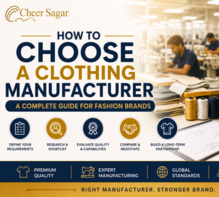
How to Choose a Clothing Manufacturer: A Complete Guide for Fashion Brands
Choosing a clothing manufacturer is one of the biggest decisions a fashion brand makes. Get it right, and you have a reliable partner who helps you grow. Get it wrong, and you deal with missed deadlines, poor quality, and frustrated customers. This guide walks you through what to look for, where to look, and how to shortlist the right partner step by step.
Why Choosing the Right Clothing Manufacturer Matters
Your manufacturer turns your designs into real products. If they don't understand your vision or can't deliver consistent quality, your brand suffers - no matter how good your designs are.
The clothing industry is one of the most promising sectors to build a business in, but it comes with real challenges. Setting up a clothing line takes more than a good idea; it takes the right partners to bring that idea to life. This is especially true if you're producing custom clothing, where there's very little room for error. A manufacturer working on custom pieces needs to be skilled and genuinely understand your vision - not just follow instructions.
Choosing the right manufacturer is one of the most essential steps in starting a clothing company. It's a decision worth slowing down for.
Key Takeaway: A clothing manufacturer isn't just a vendor who cuts and stitches fabric; they're a partner whose work directly becomes your brand's reputation. Treat the selection process with the same care you'd give to hiring a key team member.
Step 1: Get Clear on Your Requirements First
Before you contact a single manufacturer, know exactly what you need. A clear brief saves time and helps you talk only to manufacturers who are actually a fit.
Before you even start comparing manufacturers, get your requirements set in stone. Flexibility can come later; what you need first is a solid, specific idea of what you're asking a manufacturer to produce. This saves you time because you'll only be reaching out to businesses that genuinely match what you need, instead of contacting every manufacturer you can find and seeing what sticks.
Step 2: Decide Between Domestic and International Manufacturers
In short, you'll need to choose between working with a domestic manufacturer or sourcing from another country. Each path comes with its own trade-offs, so base your decision on quality, finance, and how well it lines up with your brand's ethics.
If you're looking for a clothing supplier, one of your first decisions is whether to work with a domestic manufacturer or source from manufacturers in other countries. Neither option is automatically the "right" one; each comes with its own set of benefits and drawbacks. The best way to decide is to weigh your priorities around quality, budget, and the business ethics you want your brand associated with, and let that guide your choice.
Step 3: Where to Find Clothing Manufacturers
In short: There are four practical ways to start your search: industry events, manufacturer directories, search engines, and industry groups on social media. Most brands end up using a mix of all four.
1. Attend Industry Gatherings and Trade Shows
Don't shy away from industry events. Attending trade shows and gatherings does more than help you find a manufacturer directly - it lets you present your startup on a bigger stage and connect with people who know other people in the industry. Many good manufacturer leads come through these kinds of introductions.
2. Go Through Manufacturer Directories
Clothing manufacturers are often listed across different business directories. Once you find some that look promising, you can call or email them directly and move on to the next steps getting quotations, requesting samples, and eventually placing orders.
3. Use Search Engines
This one won't surprise you: search engines like Google are a hub for local and international businesses, and they can help you find manufacturers that fit your budget and style needs. One thing to keep in mind, though - many manufacturers don't update their websites often, so you may need to sift through a few results before finding accurate, current information.
4. Check Industry Groups on Facebook
Facebook groups are often full of industry experts across different categories. These communities can connect you with supportive businesses that are willing to give back, answer questions, and point you toward the right manufacturer for your brand.
Key Takeaway: Cast a wide net when you're searching. Trade shows and directories tend to surface manufacturers who are actively looking for new brand partners, while search engines and Facebook groups are useful for background research and word-of-mouth recommendations.
Step 4: How to Evaluate and Shortlist Manufacturers
In short: Once you have a list of possible manufacturers, evaluate them on six things: communication, certifications, sustainability practices, production capacity and MOQ, ethical work practices, and location.
1. Value Communication Skills
You want to work with a manufacturer, but how interested are they in working with you? This is one of the most common problems brands run into. Pay attention to how much interest the manufacturer shows in your project and your vision, and how responsive they are to your questions. Clear communication, shared interest, and professionalism are essential for a partnership to work well.
2. Learn About Their Certifications
Certifications and quality assurance guarantees matter when you're evaluating a manufacturer. Various independent and government bodies award certifications to top manufacturers. Learning about a manufacturer's certifications tells you a lot about their market positioning and brand value, information that will factor into your final decision.
3. Understand Their Approach to Sustainability
Sustainability is a topic you and your manufacturer need to be aligned on. Depending on your requirements, your manufacturer should be able to work with organic fabrics, dyes, and chemicals that keep your products as eco-friendly and carbon-neutral as possible. If sustainability matters to your target audience, this isn't an area to compromise on.
4. Check Production Capacity and Minimum Order Quantities
Market demand grows over time, so you need to understand a manufacturer's production capacity before you sign on with them. This helps you avoid supply bottlenecks down the line and grow your business without unnecessary friction. It's equally important to check their minimum order quantities (MOQs) - a lower MOQ gives you room to experiment with new products before committing to a full-scale launch.
5. Find Out If They Follow Ethical Work Practices
No brand wants its clothes made by workers who aren't fairly paid for their labor. Ethical work practices should be non-negotiable if you want your brand to genuinely stand behind its values. Talk to potential manufacturers about their workplace practices directly, and visit their production facility in person if you're able to.
6. Weigh Business Location and Logistics
Location and logistics matter more than people expect. A manufacturer based closer to your business headquarters tends to make for a smoother working relationship, and it also helps cut down the logistical costs of shipping finished products from their facility to yours.
Key Takeaway: No single factor on this list should be a dealbreaker on its own. Weigh communication, certifications, sustainability, capacity, ethics, and location together to get a full picture of whether a manufacturer is the right long-term fit.
Step 5: Why Price Shouldn't Be Your First Filter
In short: Notice that pricing isn't part of the evaluation criteria above. That's intentional - product quality should matter more to your brand than the price difference between manufacturers.
You may have noticed that the list of evaluation factors above doesn't mention pricing. That's on purpose. Finding the right partner for your business should be about more than the lowest quote. As a clothing brand, product quality matters more than the pricing gap between different manufacturers — a cheaper manufacturer that can't consistently deliver quality will end up costing you more in the long run, through returns, rework, and lost customer trust.
Why Work With Cheer Sagar
Cheer Sagar works with fashion brands looking for a clothing manufacturing partner in India. If you're exploring the apparel industry and evaluating custom clothing manufacturers, Cheer Sagar is one option worth including in your research as you go through the steps above.
Final Checklist Before Choosing a Manufacturer
-
I have a clear, specific brief of what I need — not a vague idea
-
I've decided between domestic and international sourcing based on quality, budget, and ethics
-
I've searched trade shows, directories, search engines, and relevant Facebook groups
-
I've assessed how responsive and communicative each shortlisted manufacturer is
-
I've asked about certifications and quality assurance guarantees
-
I've discussed their sustainability practices and fabric/dye sourcing
-
I've confirmed production capacity and minimum order quantity (MOQ)
-
I've asked about ethical work practices, and visited the facility if possible
-
I've factored in location and logistics costs
-
I'm evaluating based on quality first, not on price alone
Conclusion
Choosing a clothing manufacturer takes time, and that's okay. Get your requirements clear, search in the right places, and evaluate each option on communication, certifications, sustainability, capacity, ethics, and location, not just on price. A manufacturer who checks these boxes will help your brand grow with fewer headaches along the way.
Ready to talk to a manufacturing partner? Get in touch with Cheer Sagar to discuss your requirements.
Frequently Asked Questions
What is a clothing manufacturer?
A clothing manufacturer is a business that produces garments for a fashion brand, from sourcing fabric and cutting to sewing, finishing, and preparing the final product for sale. Brands rely on manufacturers to turn their designs into real, sellable clothing.
How do you choose a clothing manufacturer?
Start by getting clear on your product requirements. Then evaluate manufacturers on communication and responsiveness, certifications, sustainability practices, production capacity and MOQ, ethical work practices, and location and logistics rather than choosing based on price alone.
How do you find clothing manufacturers?
Four practical starting points are industry trade shows and gatherings, manufacturer directories, search engines, and industry-focused Facebook groups. Most brands use a combination of these to build a shortlist.
What should you ask a clothing manufacturer?
Ask about their certifications and quality assurance process, their sustainability practices around fabric and dye sourcing, their production capacity and minimum order quantity, and their workplace and labor practices.
What is MOQ?
MOQ stands for minimum order quantity, the smallest number of units a manufacturer will produce in a single order. A lower MOQ gives a brand room to test new products before committing to a full-scale production run.
Should I choose a domestic or international clothing manufacturer?
There's no universal answer; both options come with their own benefits and drawbacks. Base your decision on what matters most to your brand: product quality, your budget, and the business ethics you want associated with your label.
Why is communication important when choosing a manufacturer?
A manufacturer's responsiveness and interest in your project are early signals of how the partnership will work in practice. Clear communication and shared professionalism make it easier to align on your vision and avoid costly misunderstandings later.
Should price be the main factor in choosing a manufacturer?
No. Product quality should weigh more heavily than the price gap between manufacturers. A lower price from a manufacturer who can't deliver consistent quality often costs more over time through rework, returns, and lost customer trust.
Why does production capacity matter when choosing a manufacturer?
Knowing a manufacturer's production capacity before you sign on helps you avoid supply bottlenecks as demand for your brand grows, so your business can scale without production becoming the limiting factor.
Related Blog
Small Order Clothing Manufacturers In India
So, you have started or want to create a clothing line in India? Where to begin? The first step would be...
Quality Control: A Bridge Between India And Spain's Fashion
Historically, Europe, especially Spain, has been a dominant force in clothing manufacturing. However, India has emerged as a major player...
Setting Up A Private Label Baby Clothing Line
With the increasing demand for stylish, comfortable, breathable, fashionable, and diverse baby clothes, the textile industry has witnessed the...